
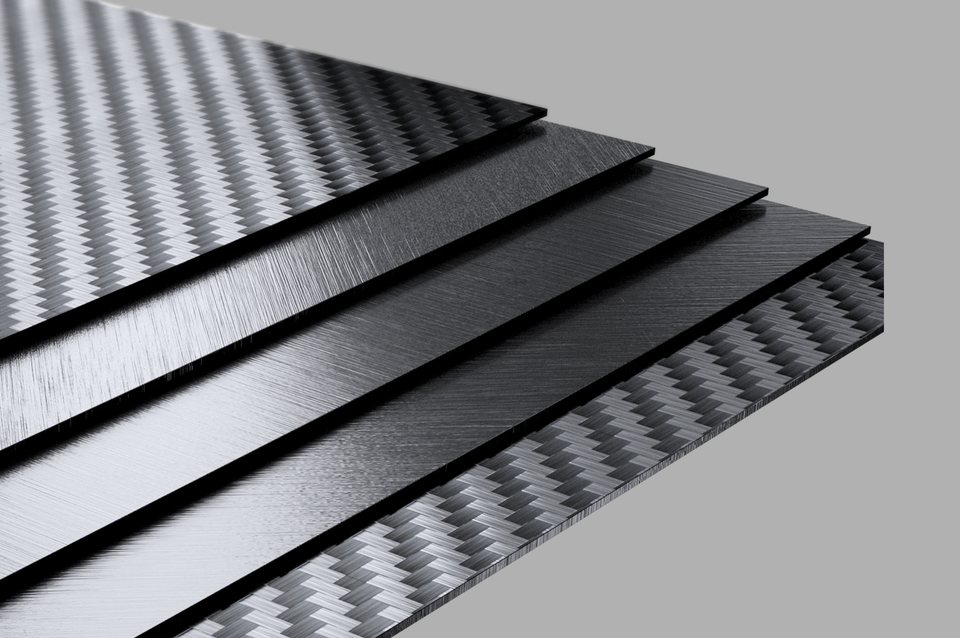
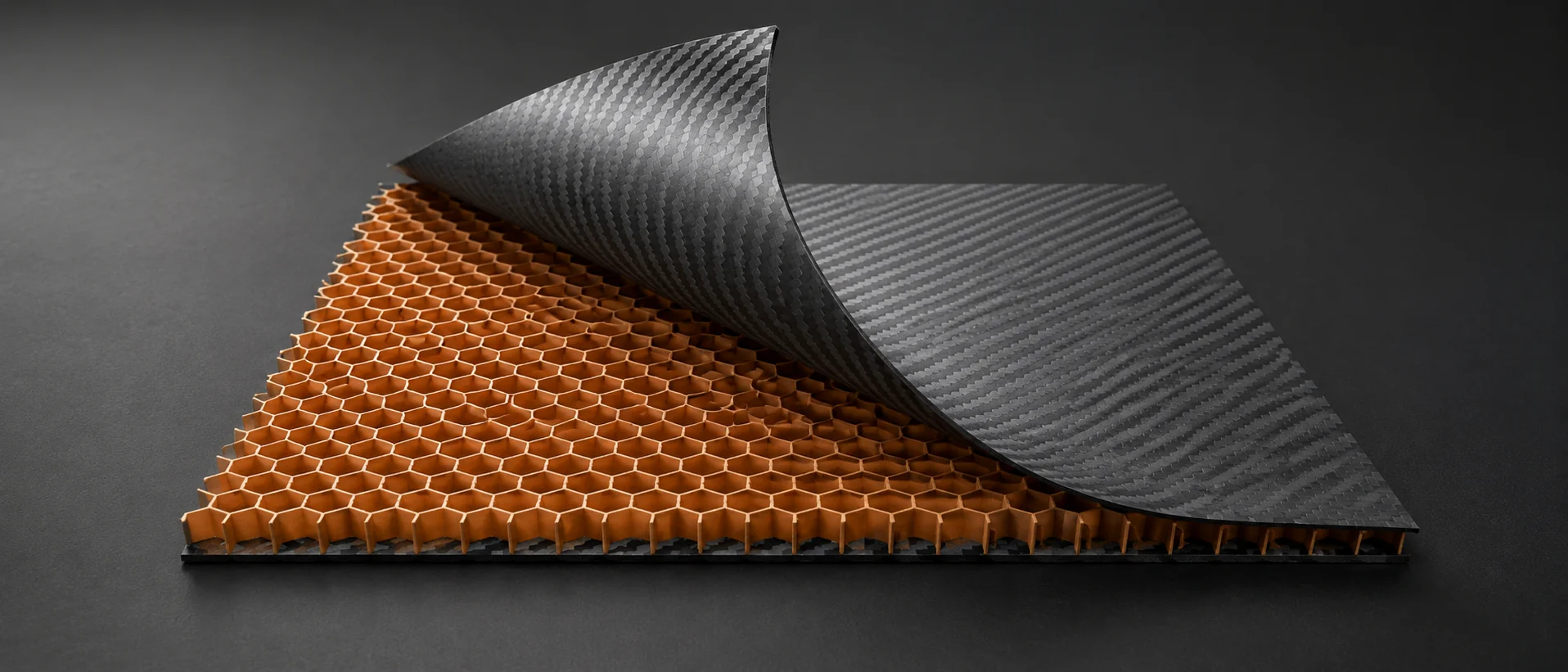
How Far Does Your Evidence Actually Reach?
Tell us what you need to decide. We will help you find the carbon fiber guide, industry path or project route that fits the question.
Start With What You Need to Decide
It is easy to lose time by searching the nearest carbon fiber term. The faster route is to ask what the missing answer is stopping you from doing: choosing a material, checking whether a part will work, planning production, comparing options, approving a result or requesting a quotation.
NEXWAVE separates those decisions because they do not need the same evidence. A fiber data sheet cannot approve a finished part. A machine name cannot prove that a process fits your geometry. A low material price does not tell you what a delivered component will cost.
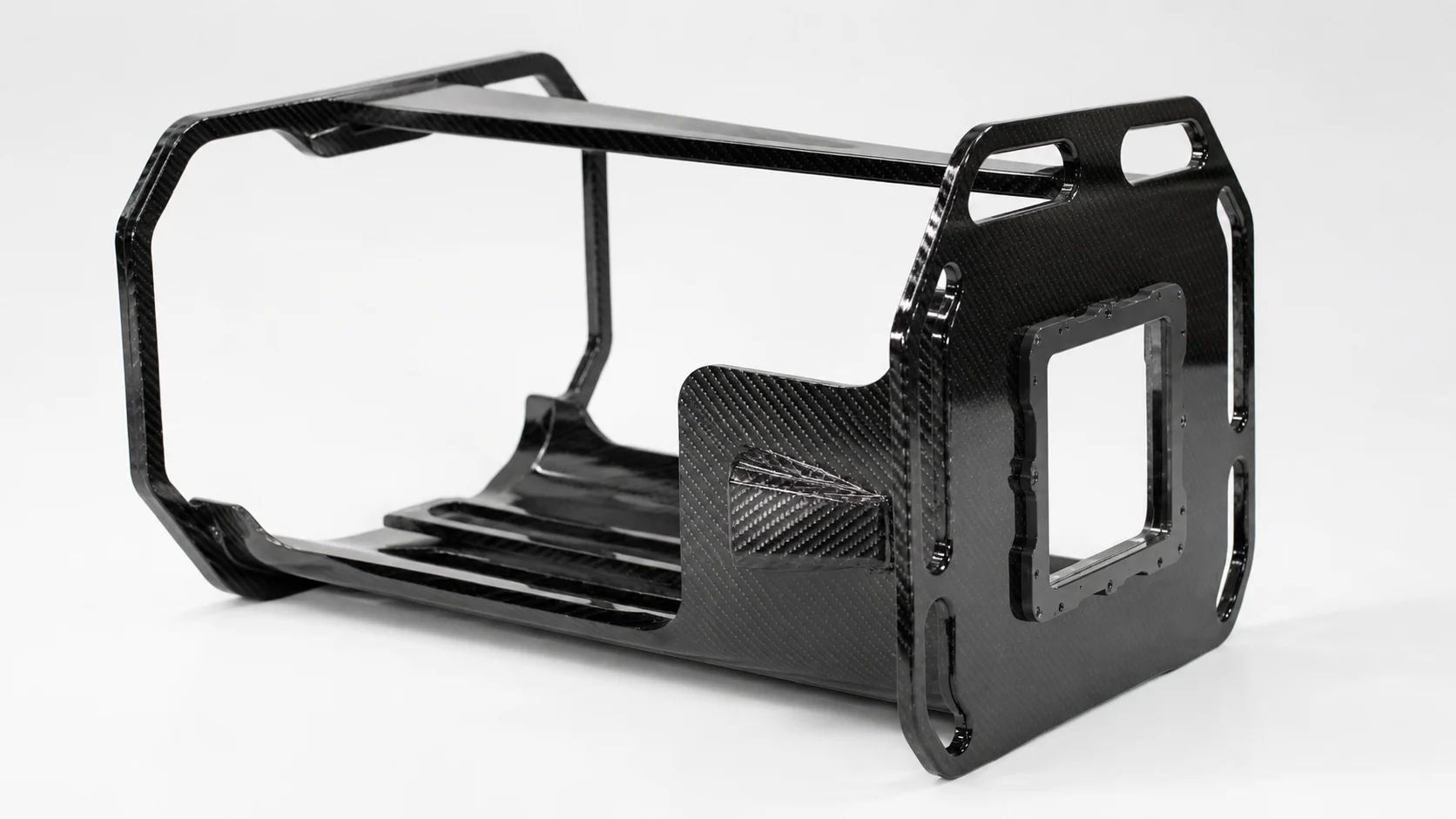
Choose by decision and you can:
avoid approving a finished part with data that only describes the fiber, material or test coupon;
settle fit, appearance and acceptance before you pay to remake a sample that was never defined clearly;
prevent machining, inspection, packing or delivery work from appearing as a surprise after pricing has started;
send the question to the right owner before missing scope holds up approval or delivery.
Find the row that sounds most like your situation. It tells you what the path can answer and where the decision should go next.
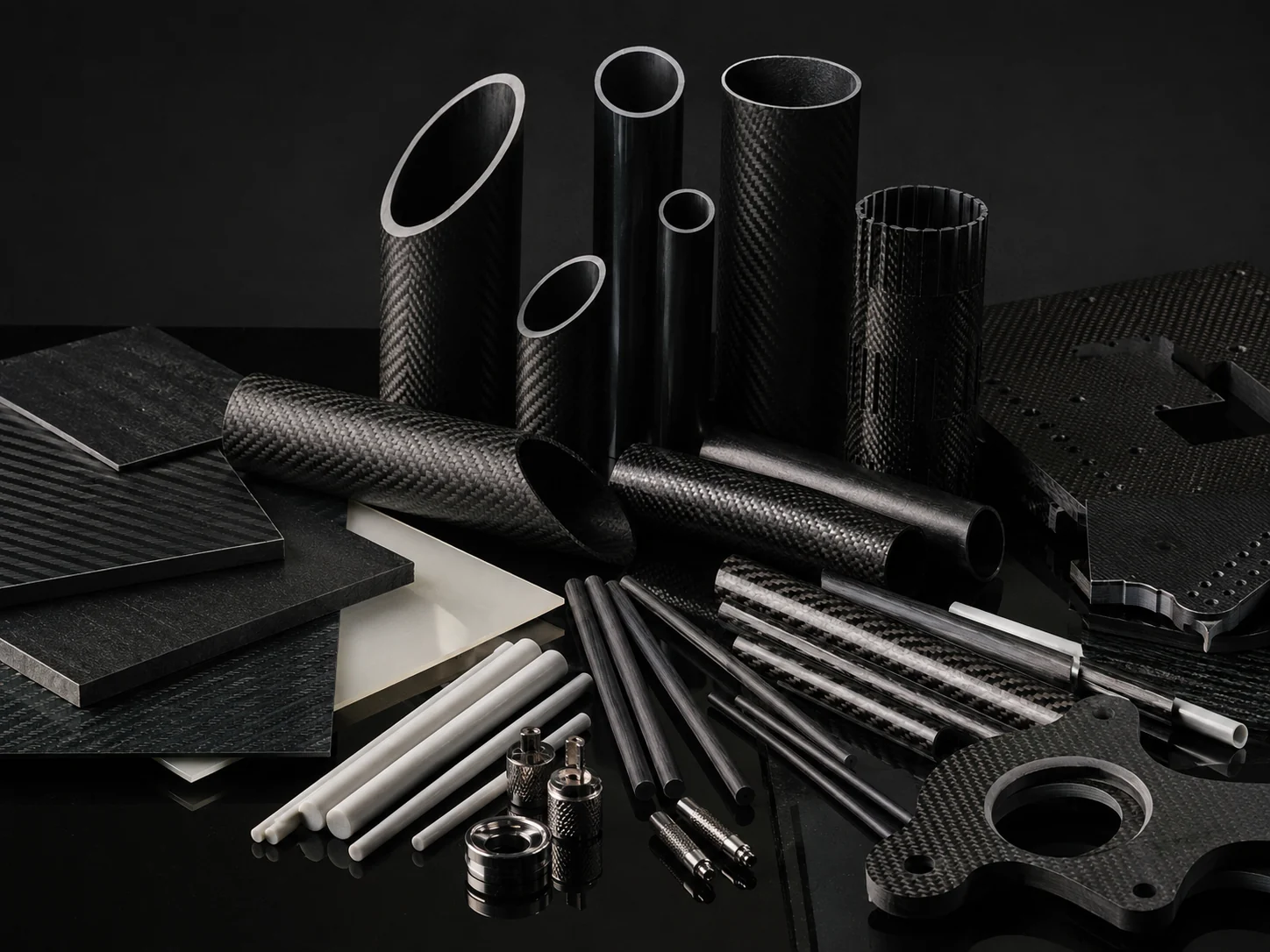


Find the guide that owns the subject
This Hub points to specialist guides; it does not try to squeeze all of them into one page. Guides that are not yet published remain visible as planned destinations. If your project cannot wait, use the title to describe the subject in a technical question.
 MEDIA BAND — WORDS INTO QUESTIONS / 21:6
Turn a vague question into a decision-ready question
A short question is fine. It just needs enough context to stop two people from answering different questions. These examples show what to add without turning the first message into a full RFQ.
Name the object, use, load direction, allowed deflection or failure condition, and the evidence the decision needs
Properties and validationName the supplied form, visible characteristics, inspection conditions and any written or approved appearance reference
Material form, then Materials if sourcing is requiredAlign the object, function, load, geometry, environment and required result before comparing values
ComparisonsAdd the use, width and length, tolerances, finish, quantity, delivered condition and inspection needs
Cost guidance, then Materials or ProductsPreserve the governing acceptance basis, symptom, measurement method, order or lot identity, event context and any downstream work
Validation or the responsible project ownerFirst Ask What the Number Actually Describes
A carbon fiber number can be correct and still lead your project in the wrong direction.
The usual problem is not the number itself. It is using fiber data to judge a laminate, or using a coupon result to approve a finished part.
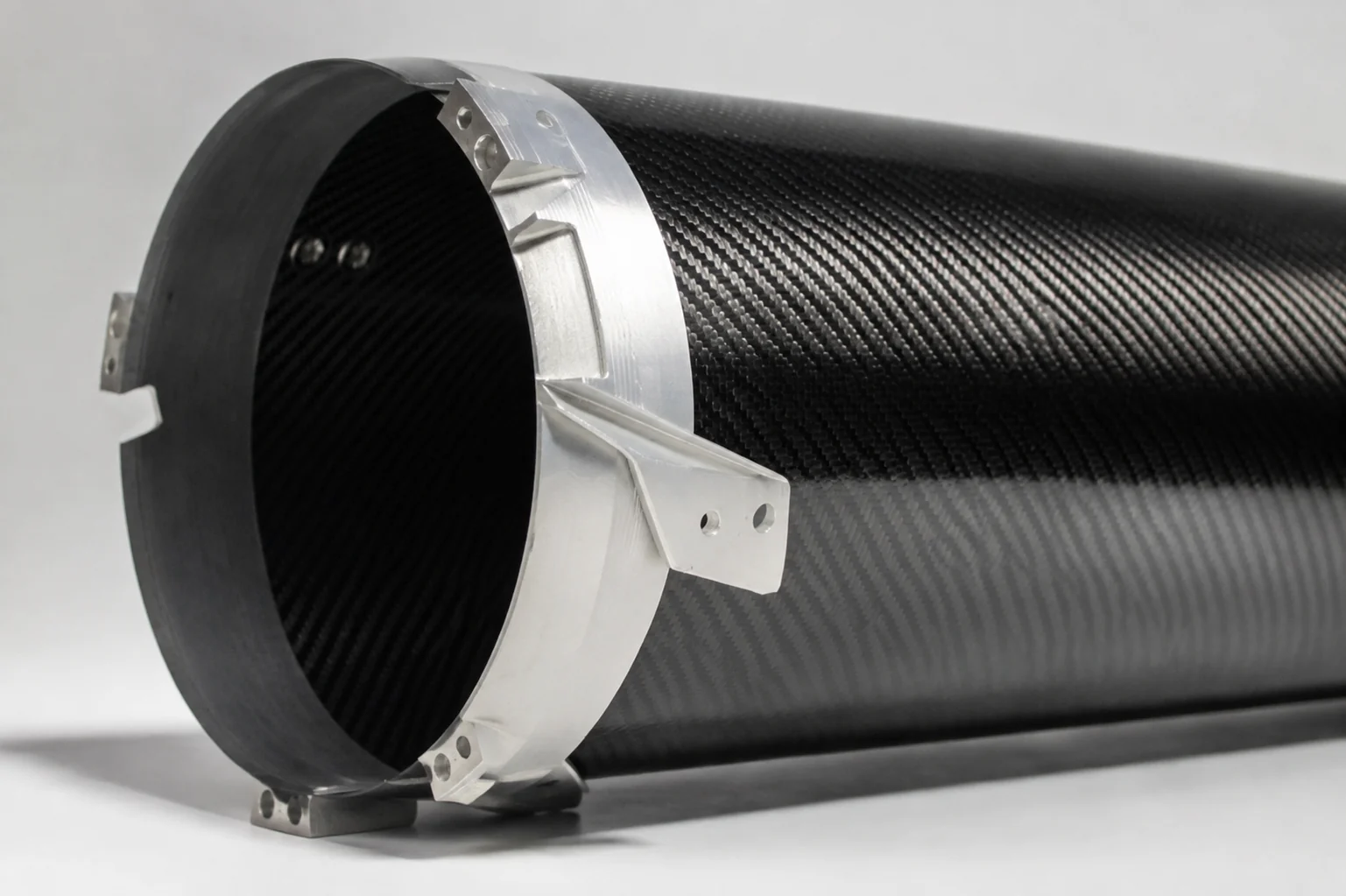
Start by naming the object. Carbon fiber is the reinforcement. A polymer matrix binds and supports it. Together, in a designed structure, they form carbon-fiber-reinforced polymer, or CFRP. The finished part adds geometry, holes, joints, interfaces, machining, assembly, surface condition and project-specific verification. Each added layer changes what the evidence can prove.
Intermediate terms describe different points between fiber and finished component:
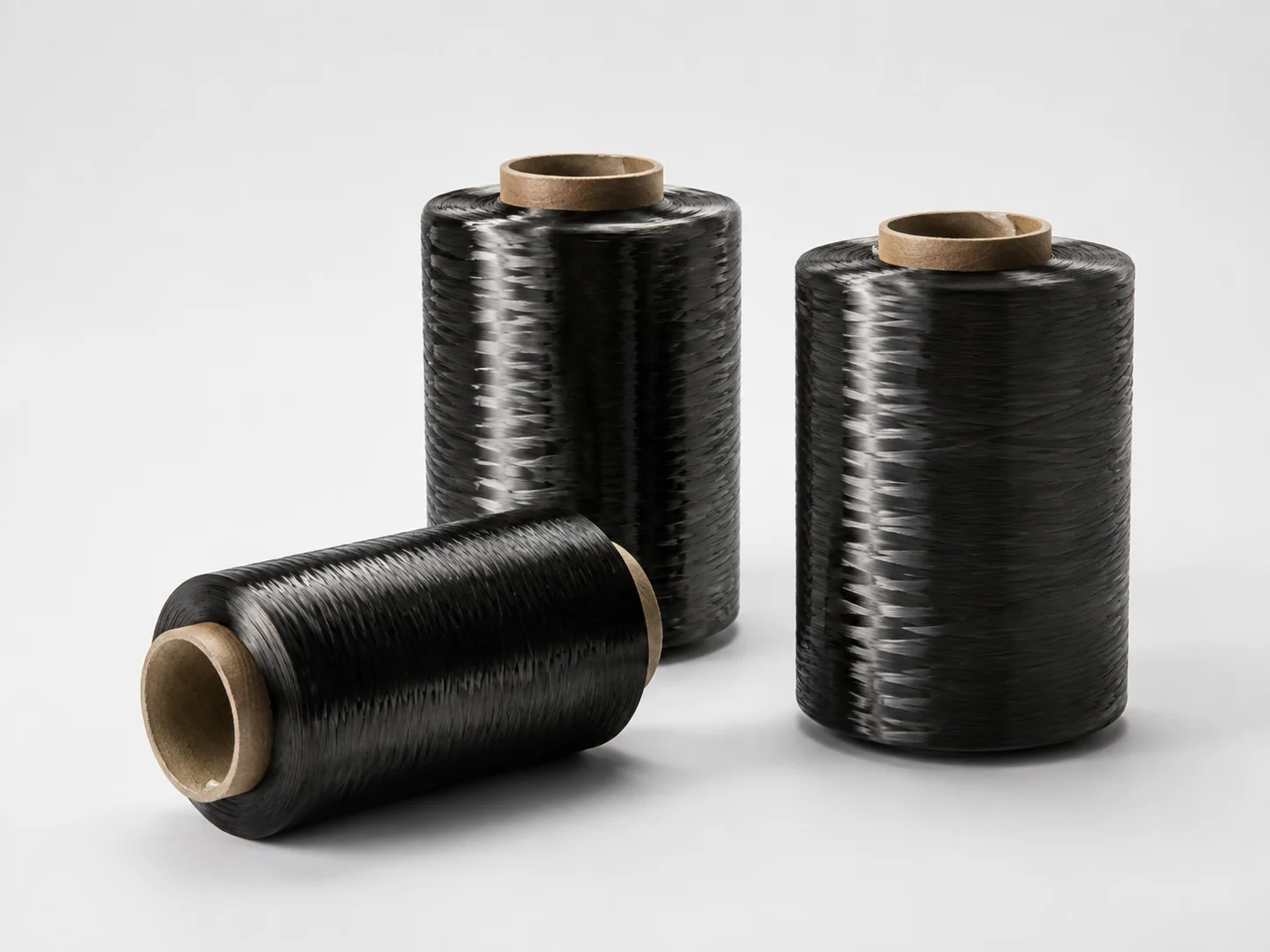
Carbon fiber / tow
The reinforcement, commonly grouped as continuous filaments in a tow
Fiber-grade data does not by itself define a laminate or finished part
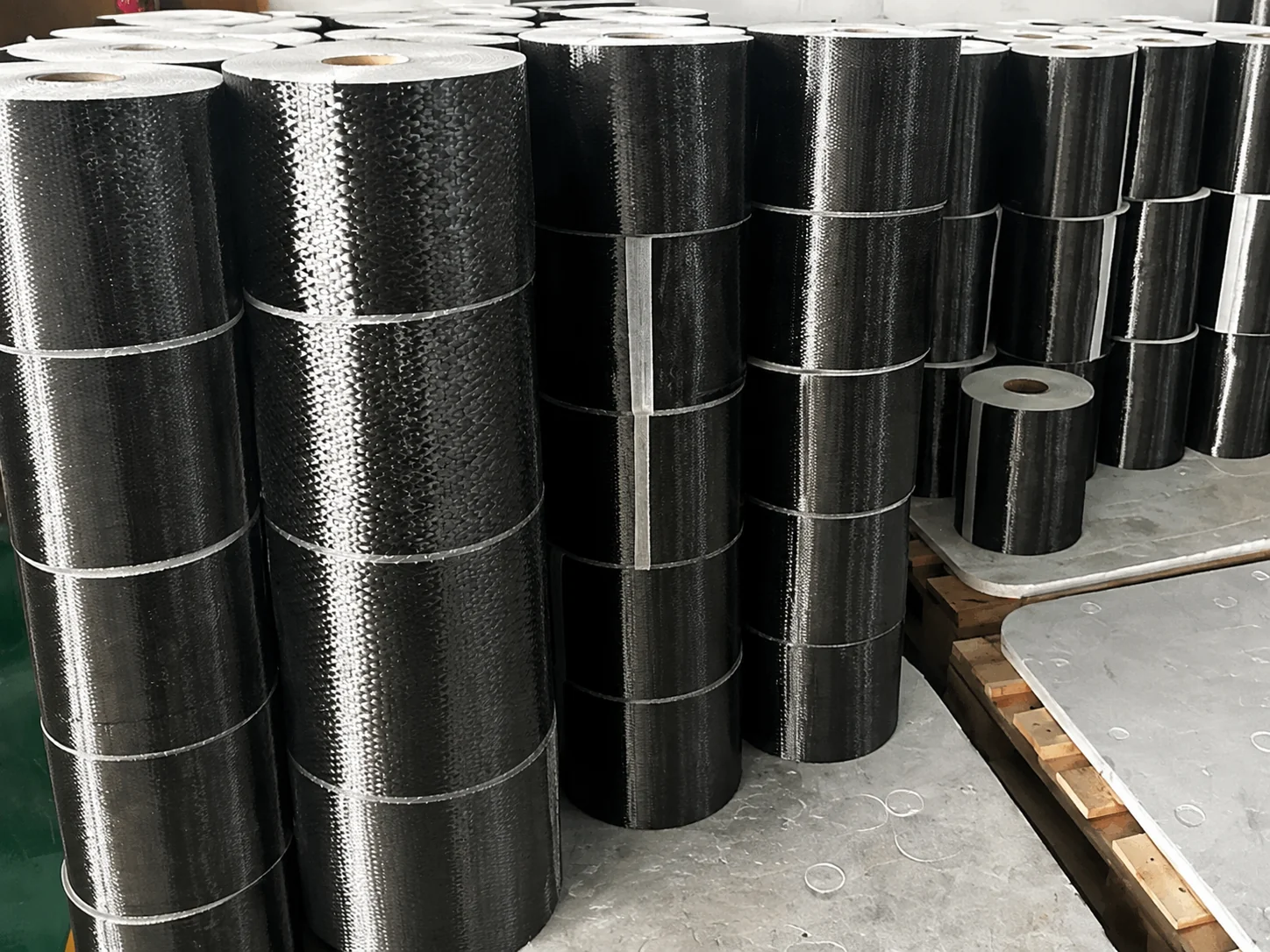
Fabric or dry UD
A reinforcement form with a defined textile or directional arrangement
Orientation, handling, resin introduction and process options change
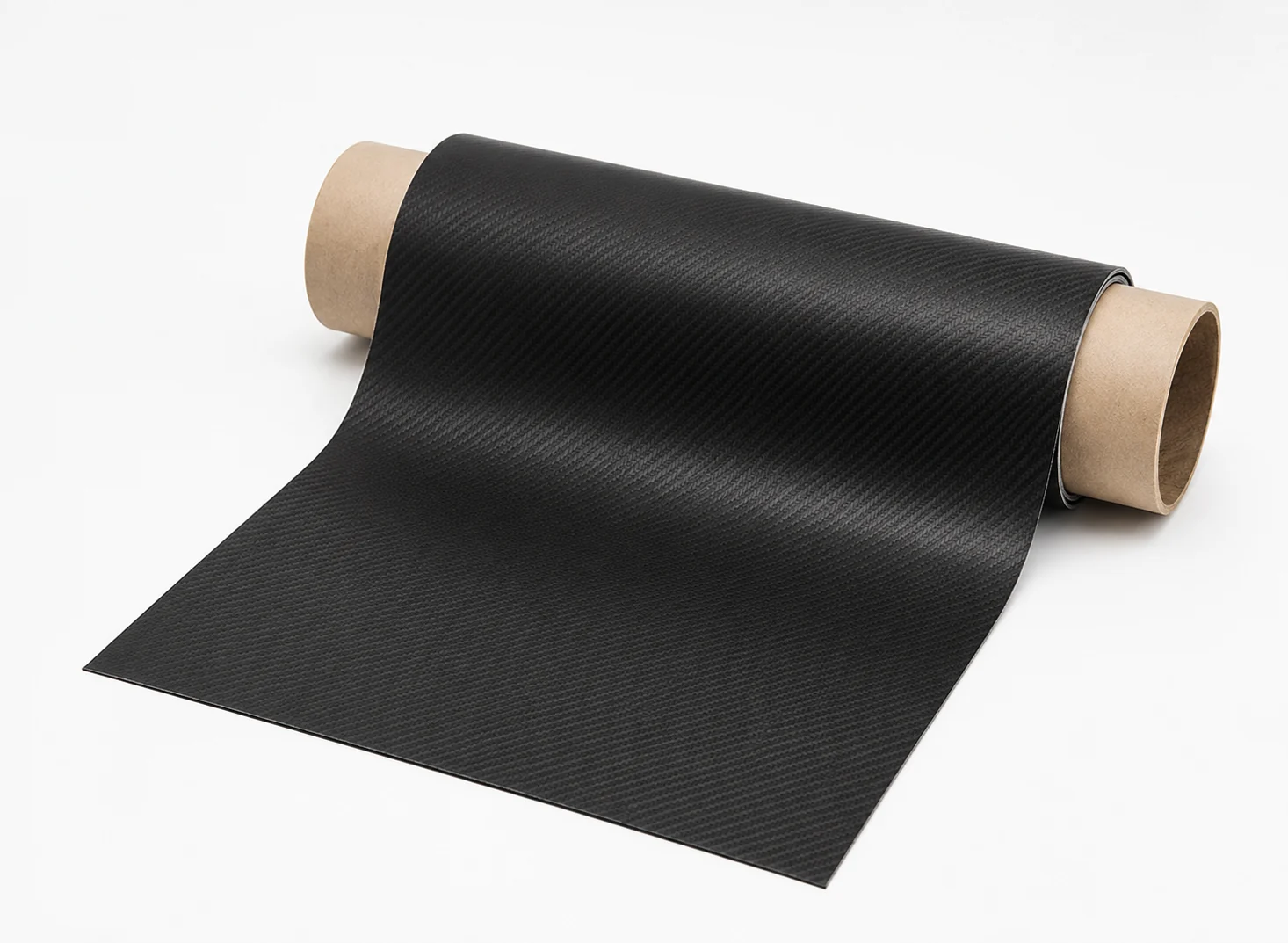
Prepreg
Reinforcement supplied with a controlled resin system already incorporated
Storage, handling, layup and cure requirements differ from dry reinforcement
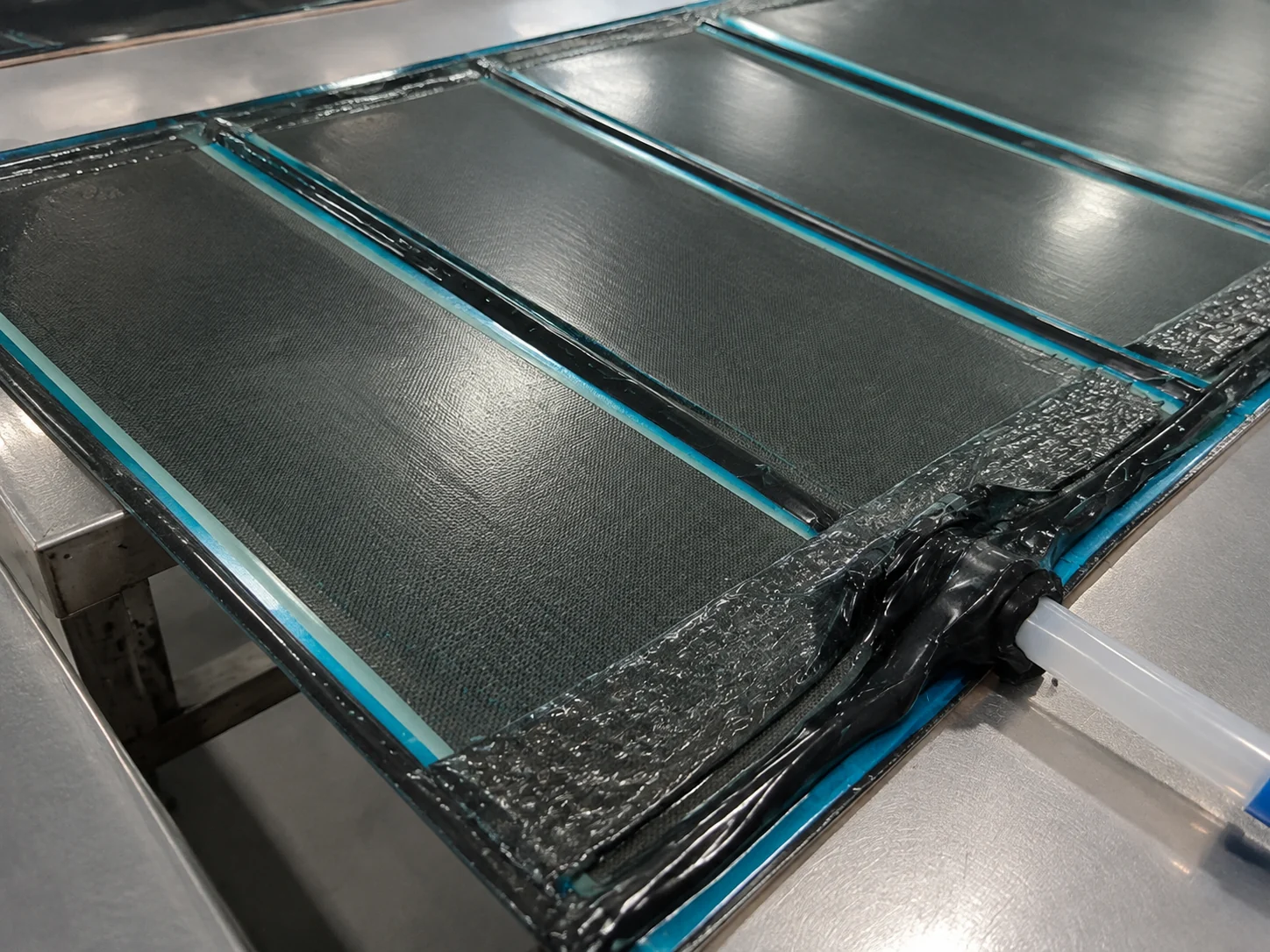
Resin system
The polymer matrix and related chemistry used with the reinforcement
Temperature, environment, processing and composite behavior depend on the selected system
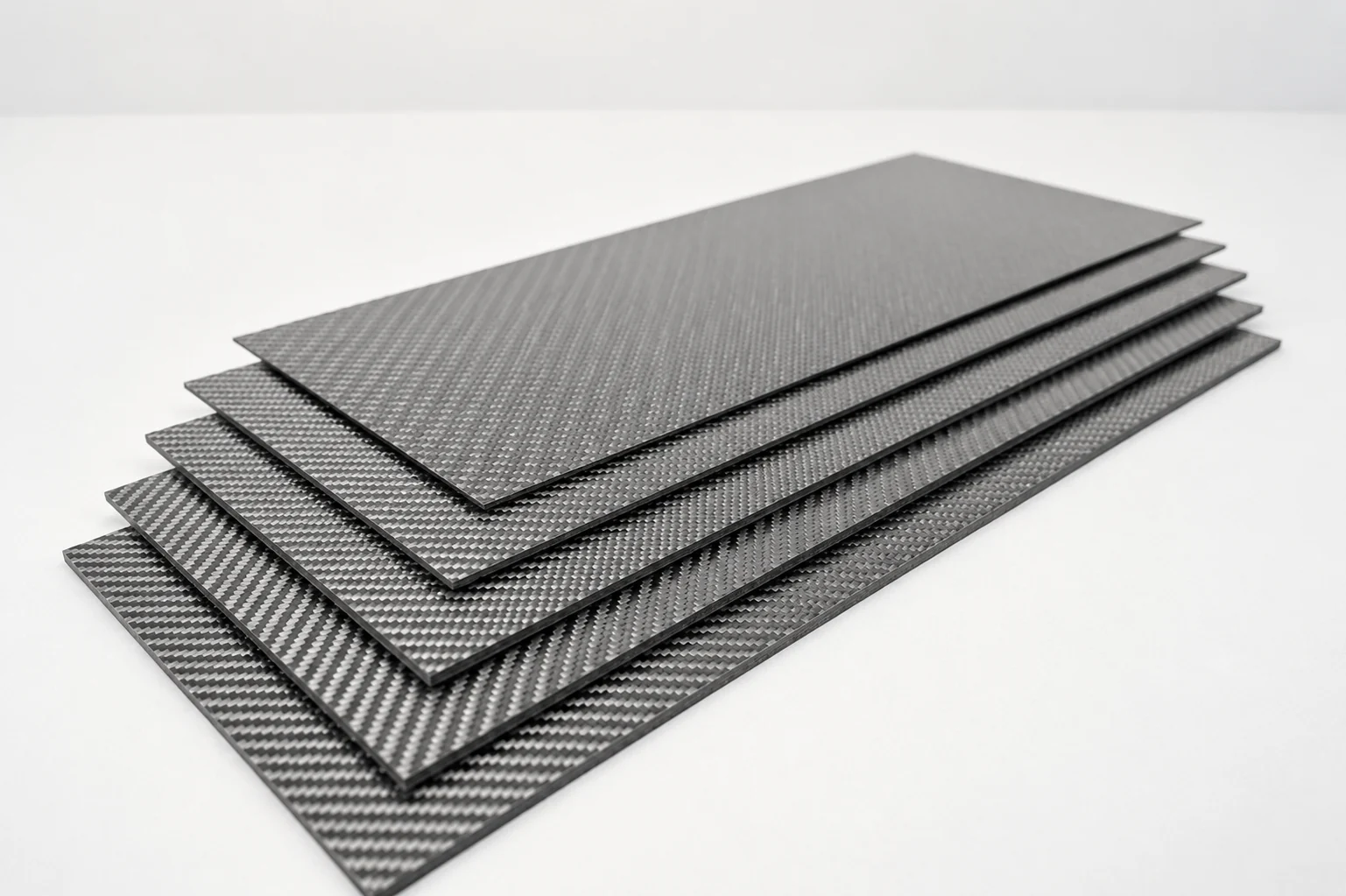
Laminate
A built-up composite structure with defined layers, orientations and material system
The laminate is the relevant level for many structural and coupon-test questions
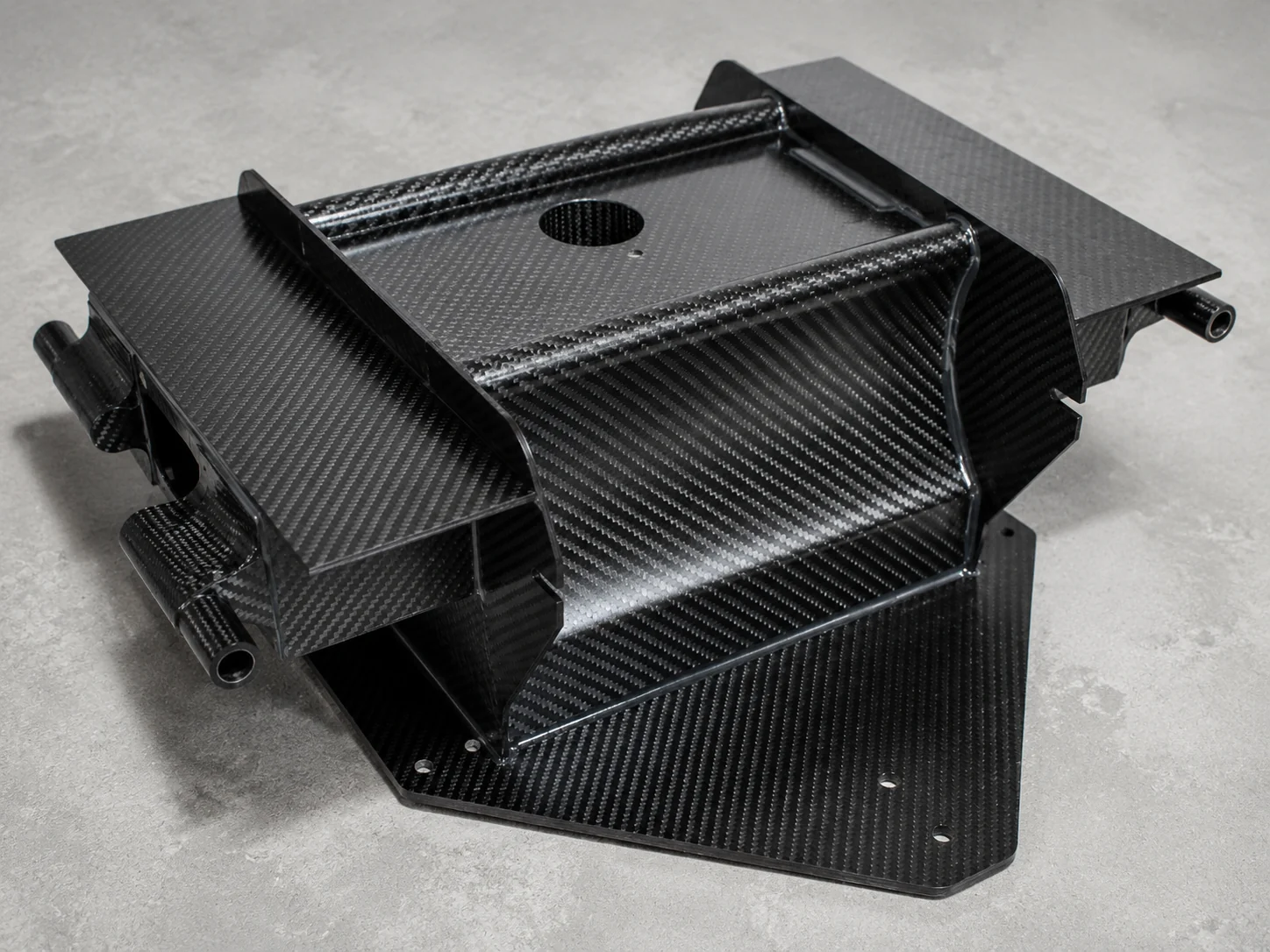
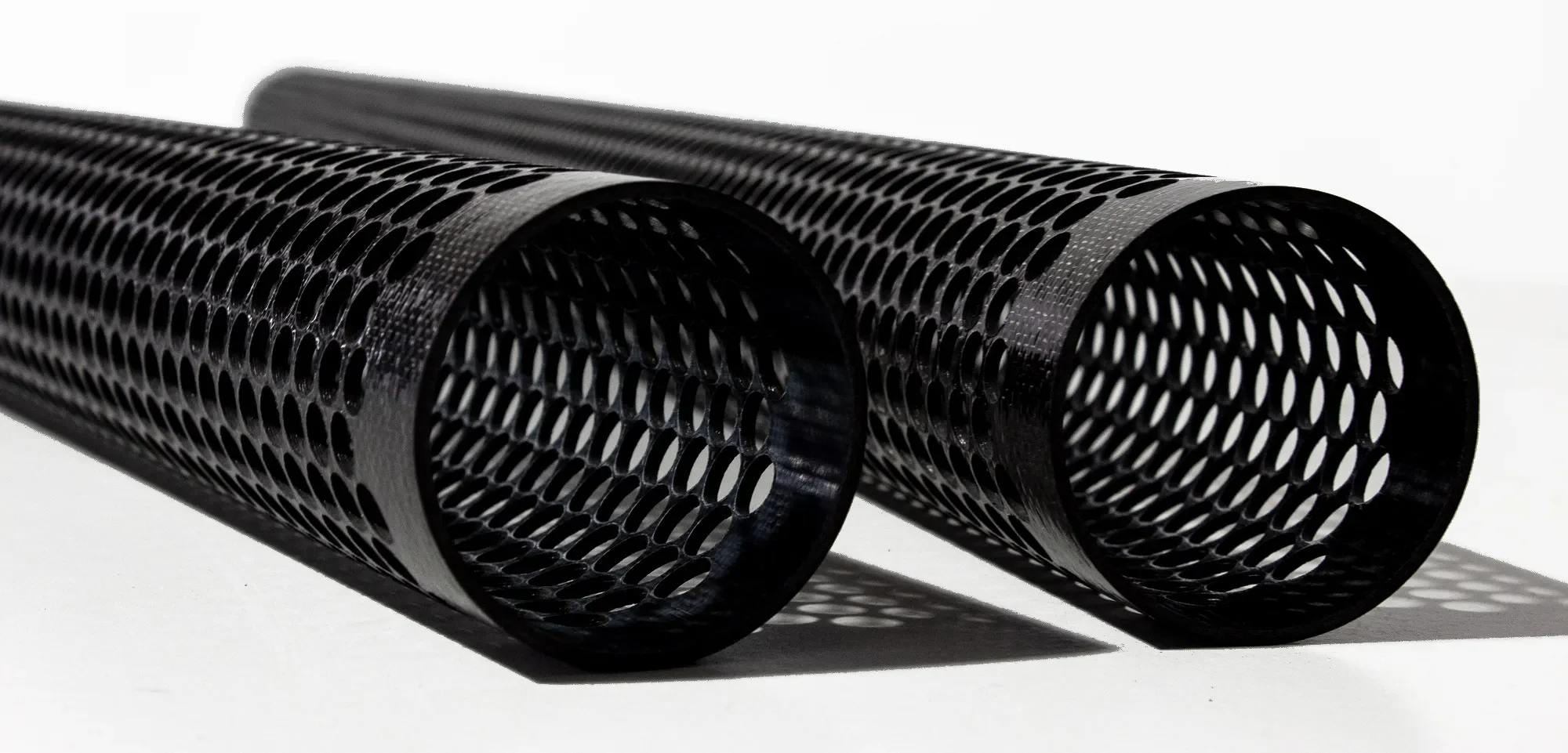
Finished CFRP part
The manufactured component with geometry, interfaces, finish and acceptance requirements
Part performance and conformity depend on more than the underlying fiber data
If you are asking “what is carbon fiber?” or “what is carbon fiber made of?”, continue with the fundamentals path. If you already know the object, skip the general definition and move to behavior, material availability, manufacturing or finished-part verification.
Apply the rule early and you are less likely to pay for a sample, test or part that answers the wrong question. You also avoid accepting a delivered component on evidence that never covered its drawing, fit or use conditions.
evidence can only travel as far as its object, method and conditions allow.
Make the Property Match the Job the Part Must Do
“Strong,” “stiff,” “light” and “heat resistant” sound useful, but none of them tells you whether a part will fit, hold its shape, survive the environment or pass the required check.
Before you choose a material, connect the property to the actual object, load direction and use condition.
A nominal fiber value is not a laminate value, and a laminate result is not automatically a finished-part result. NEXWAVE separates those levels before a property statement is used for material screening, design discussion or validation planning.
Carry these questions into any properties guide:
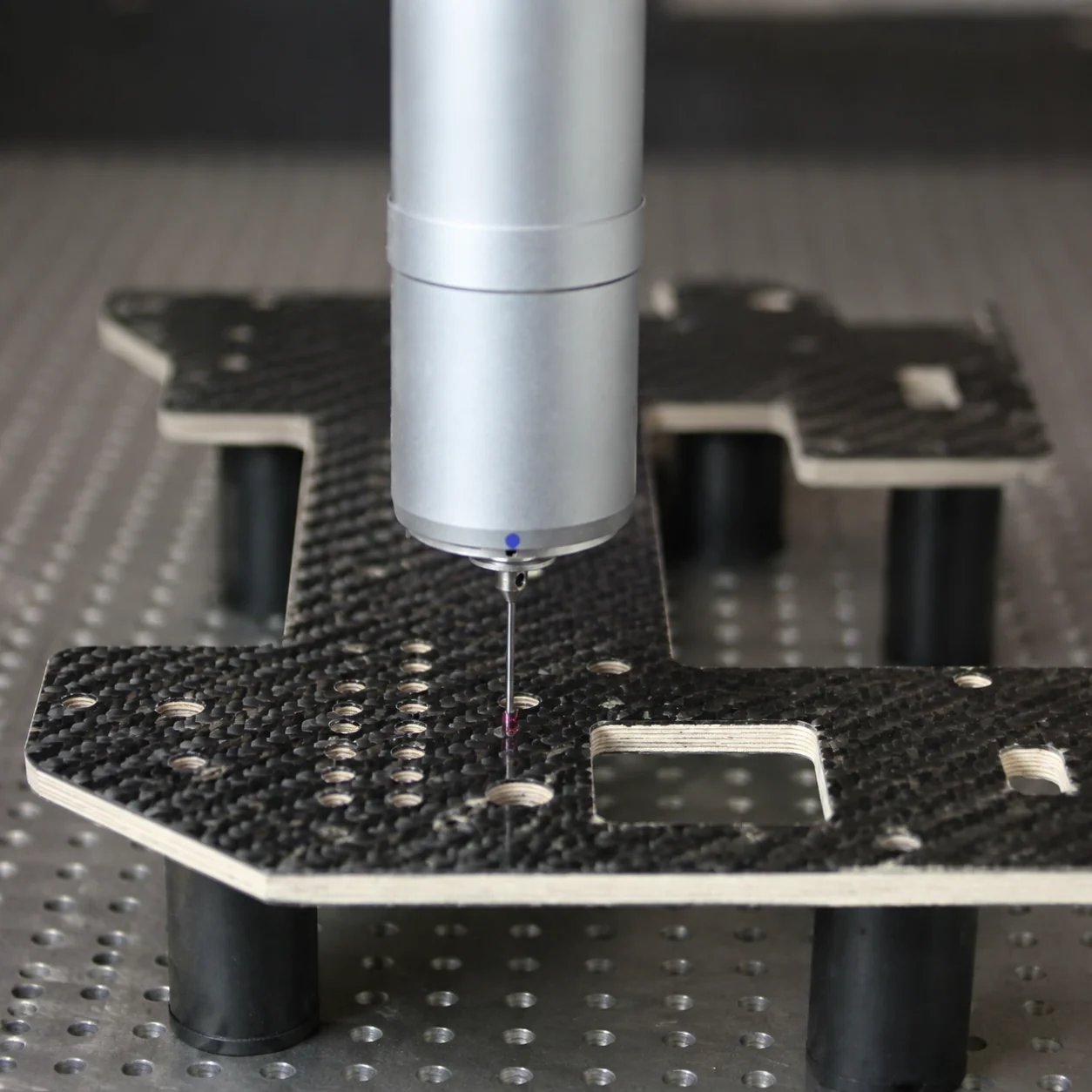
Object being described
Fiber, prepreg, laminate, coupon and finished part support different conclusions
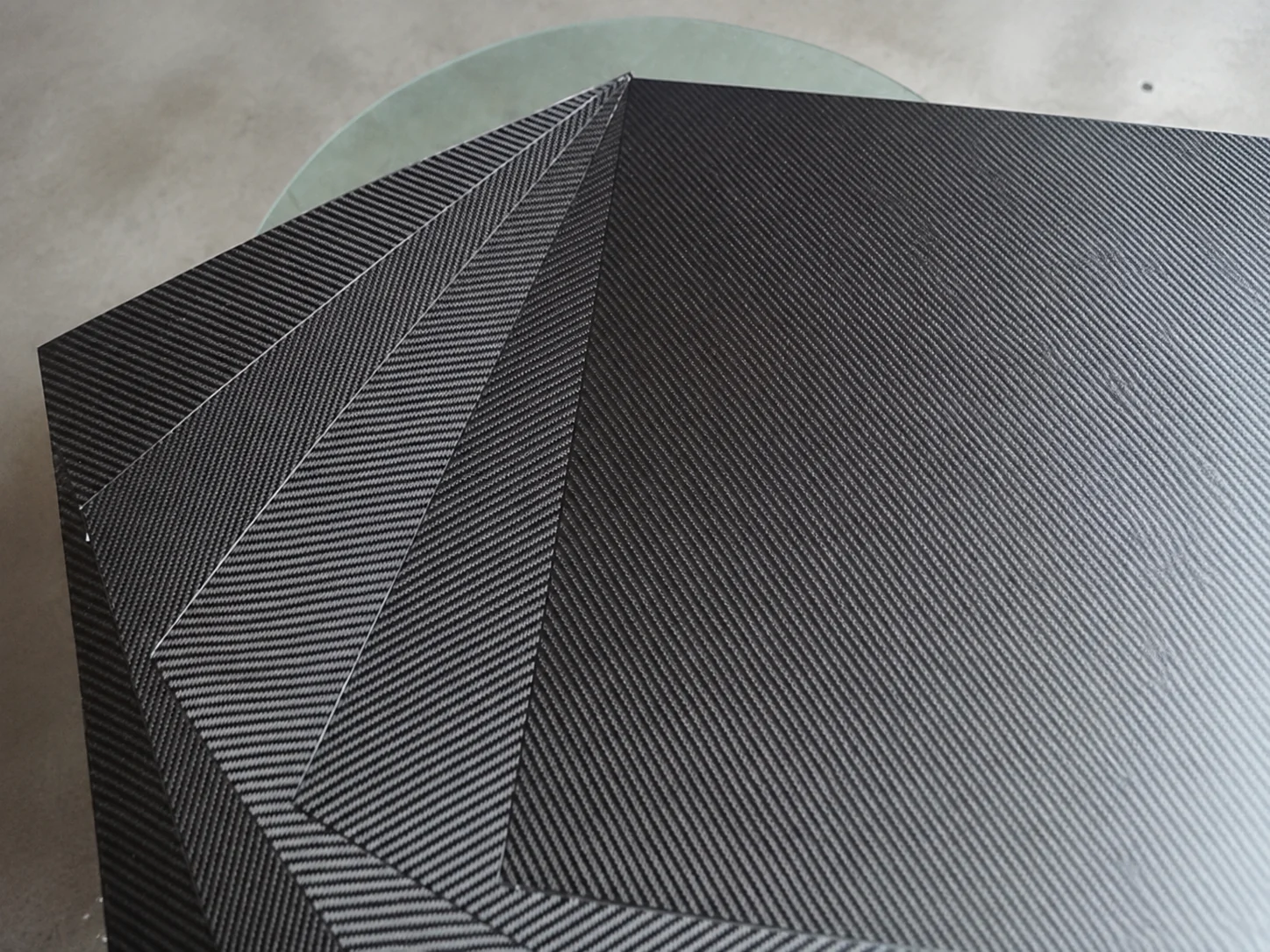
Fiber orientation and load direction
CFRP can behave differently along, across and between reinforcement directions
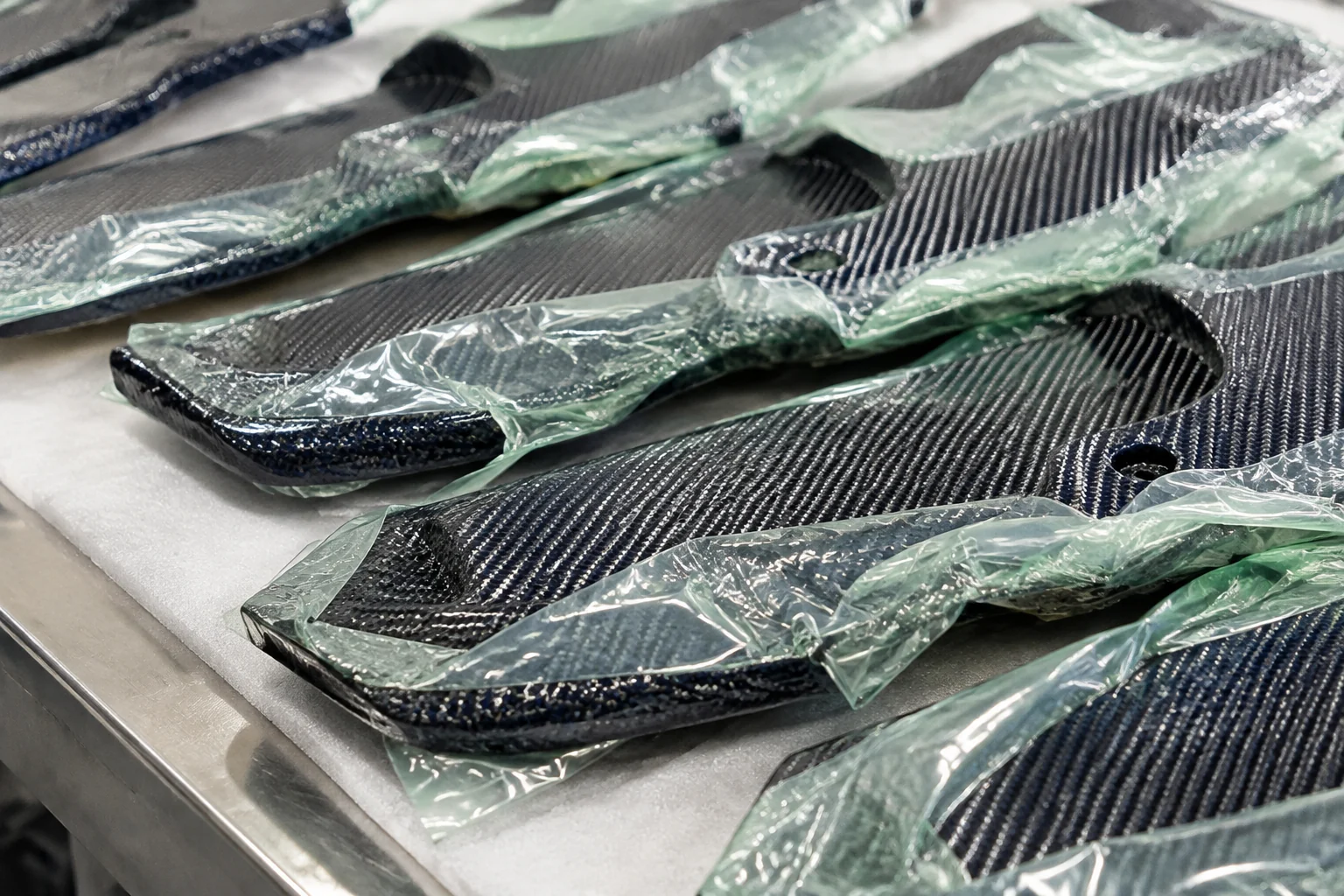
Matrix and material architecture
Resin system, reinforcement form, layer sequence, core, adhesive and interfaces affect the composite response
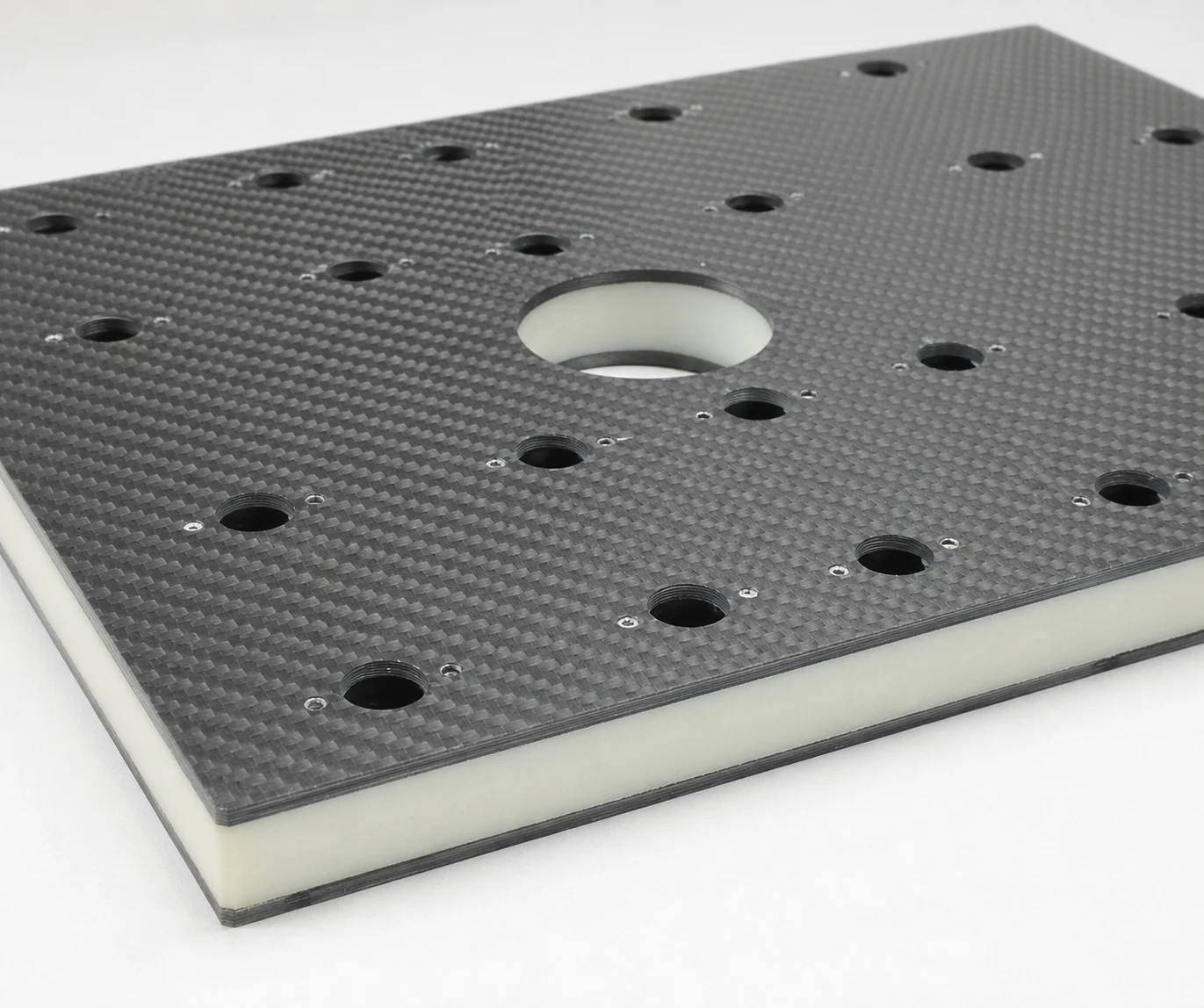
Geometry and local features
Thickness transitions, holes, inserts, edges, joints and load introduction can control the part result
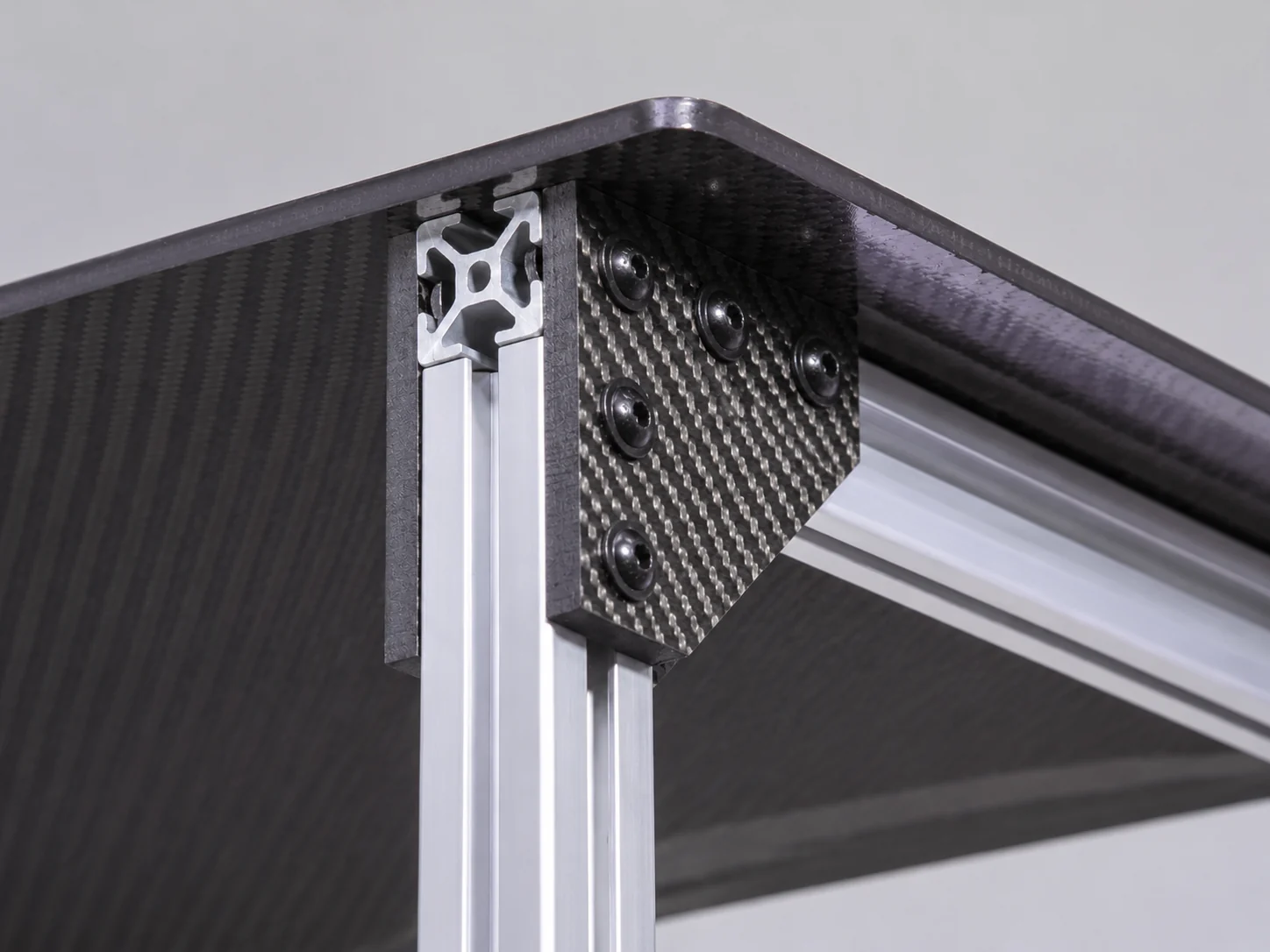
Service environment
Temperature, moisture, chemicals, impact, fatigue and electrical or thermal conditions may change what must be evaluated

Test method and conditioning
Specimen form, direction, preparation, conditioning and method determine what the result represents
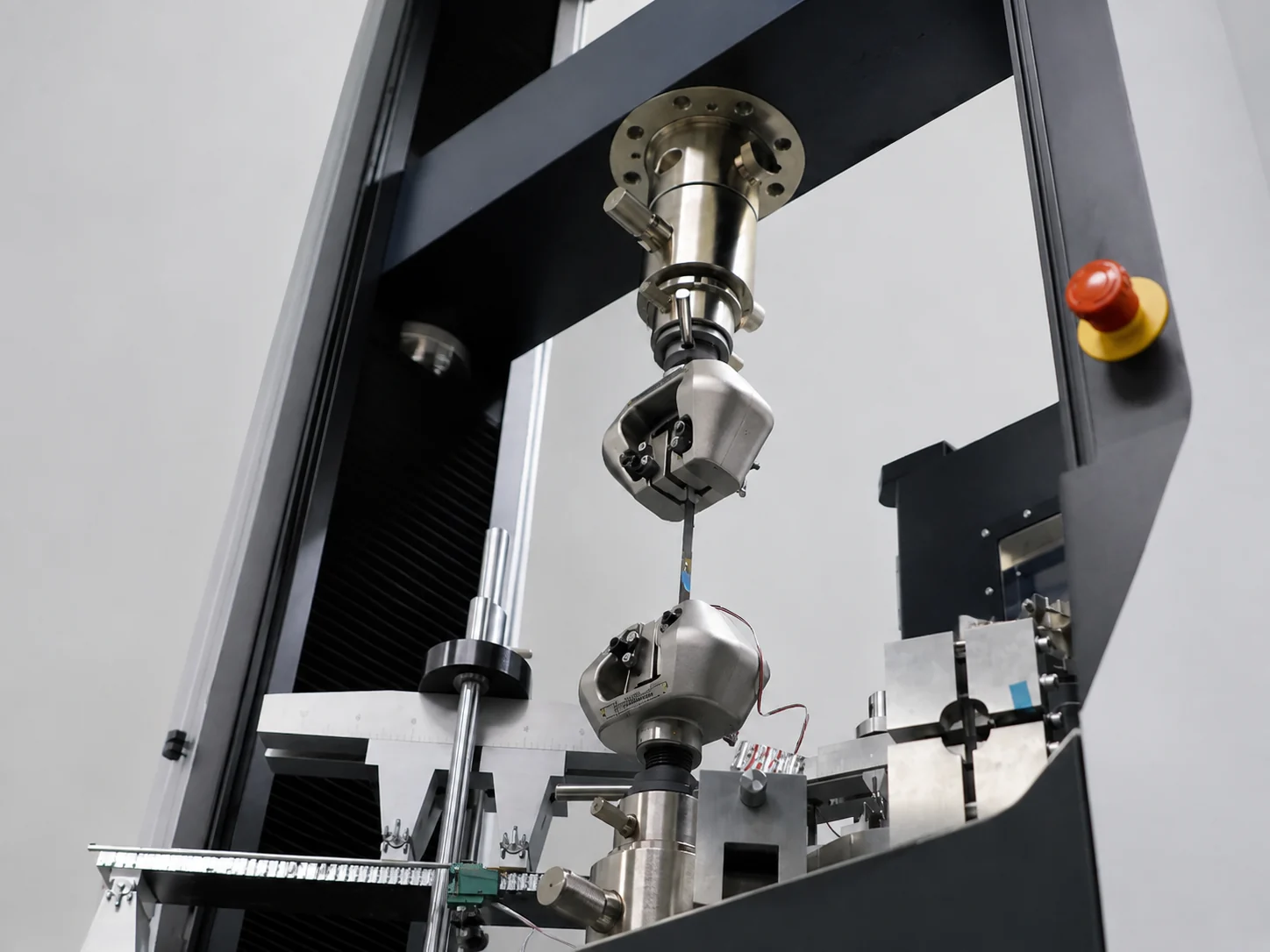
Once the object and conditions are clear, strength, stiffness, mass, thermal behavior, electrical behavior and environmental resistance become usable. The properties path then helps you decide whether a material data sheet is enough or whether the project needs laminate analysis, coupon testing or part-specific verification.
When someone asks for the “hardest” carbon fiber, ask what must not happen. Must the part resist a dent, bend less, carry more load or avoid a defined failure? Those are different requirements. Name the required result, then add the object, load direction, geometry and environment. Now the question can be matched to relevant evidence.
Use the properties path to understand material behavior. Use a commercial or technical-question path when a drawing, load case, environment or acceptance requirement controls the decision. NEXWAVE can then connect the question to the material form, manufacturing route and verification needed next.
That keeps a good-looking number from pushing the wrong material into design or purchasing, only for the real geometry or load direction to disqualify it later.
 MEDIA BAND — FOUR DECISIONS AHEAD / 21:6
Do Not Let One Material Word Stand In for Four Decisions
“Carbon fiber” may mean raw reinforcement, prepreg, a finished plate, a structural layup or simply a visible weave. If buyer and supplier mean different things, the material can arrive exactly as quoted and still be useless for the intended process or appearance.
Separate four decisions: the supplied form, its structural role, the reinforcement arrangement and the visible surface. This makes both technical communication and sourcing more precise.
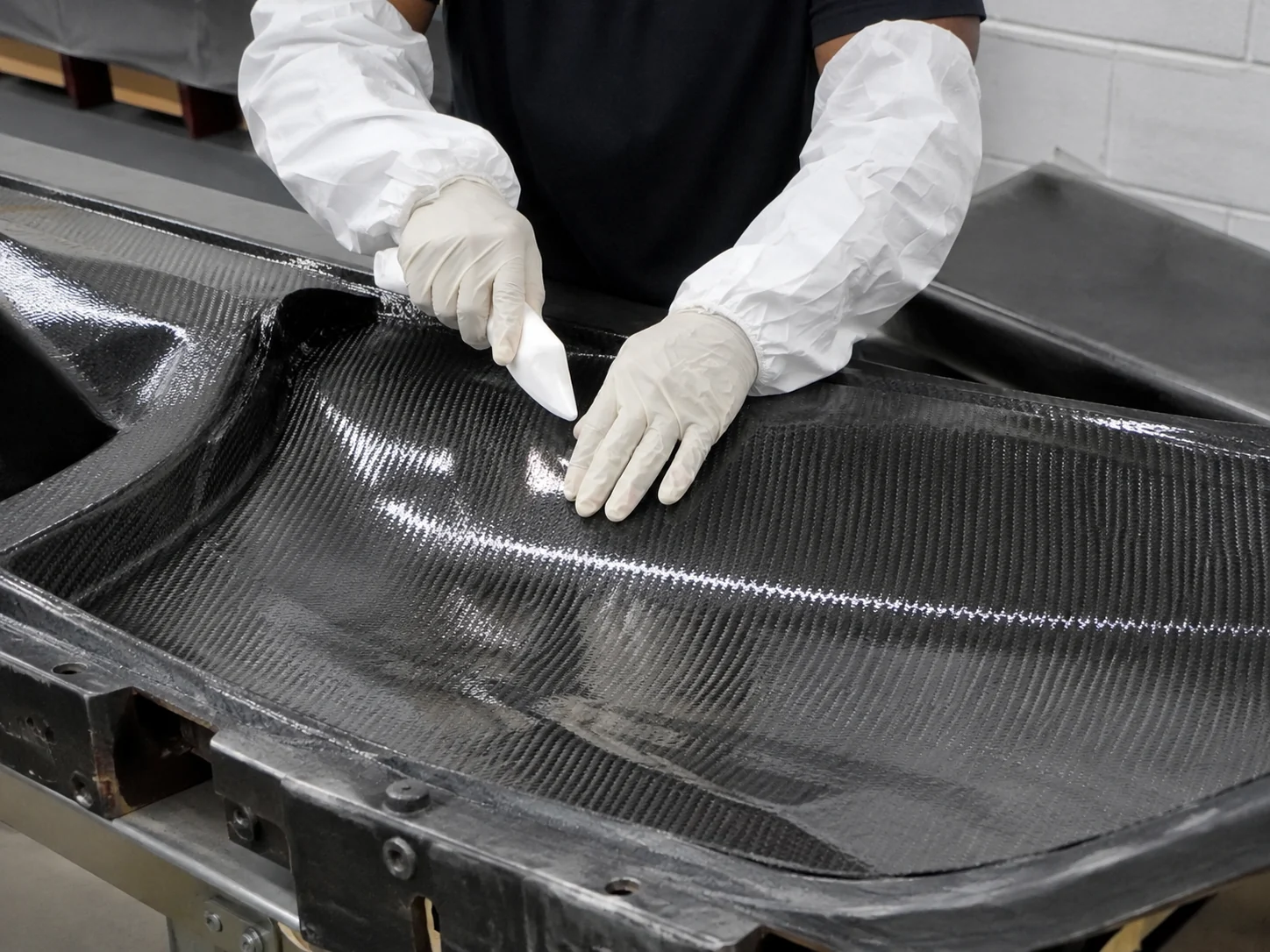
What form is supplied?
Confirm grade, dimensions, resin relationship, handling and intended process
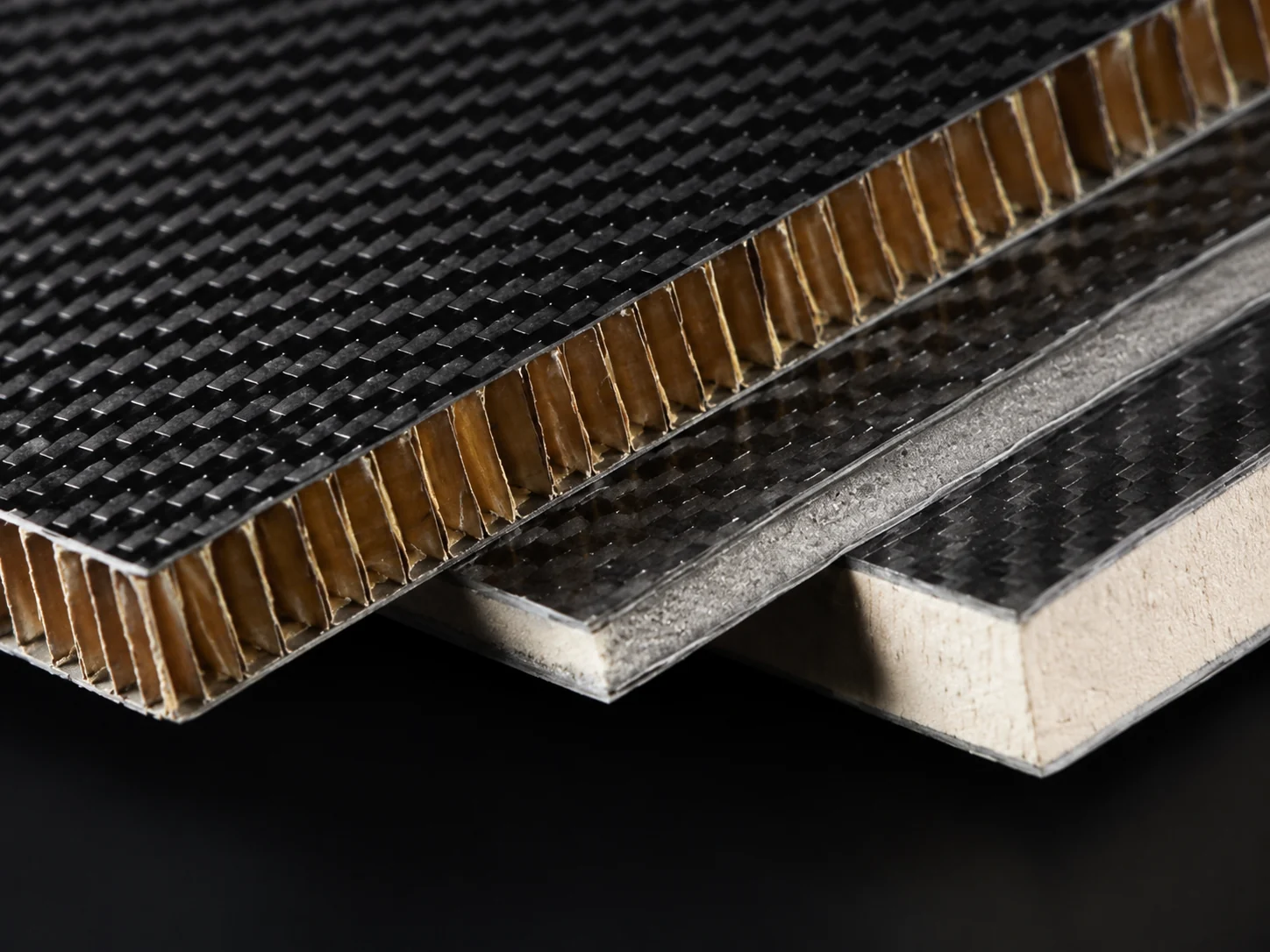
What role does it play?
Confirm the structural object and where its properties are being used
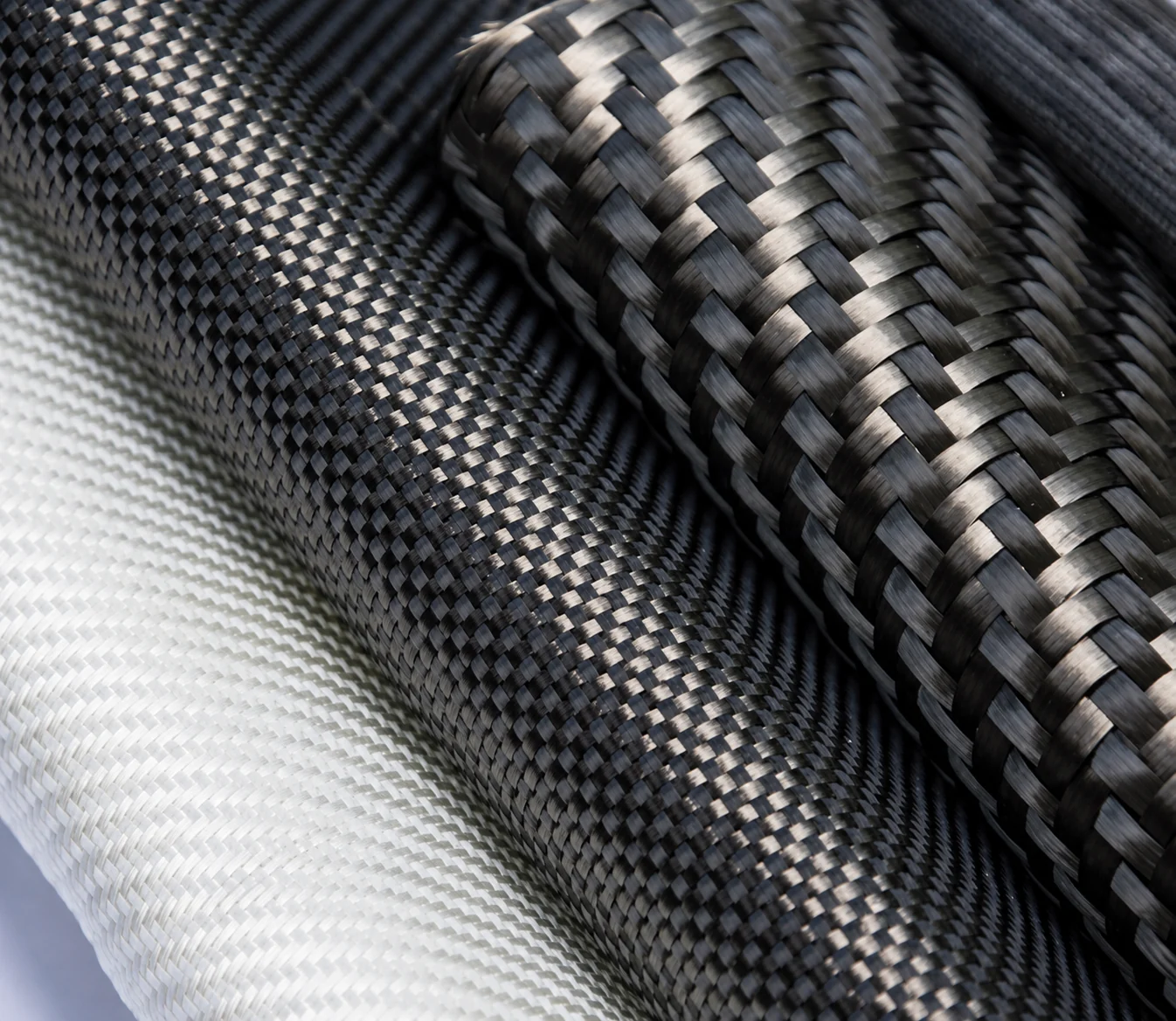
How is reinforcement arranged?
Confirm load directions, drape, geometry and manufacturing compatibility
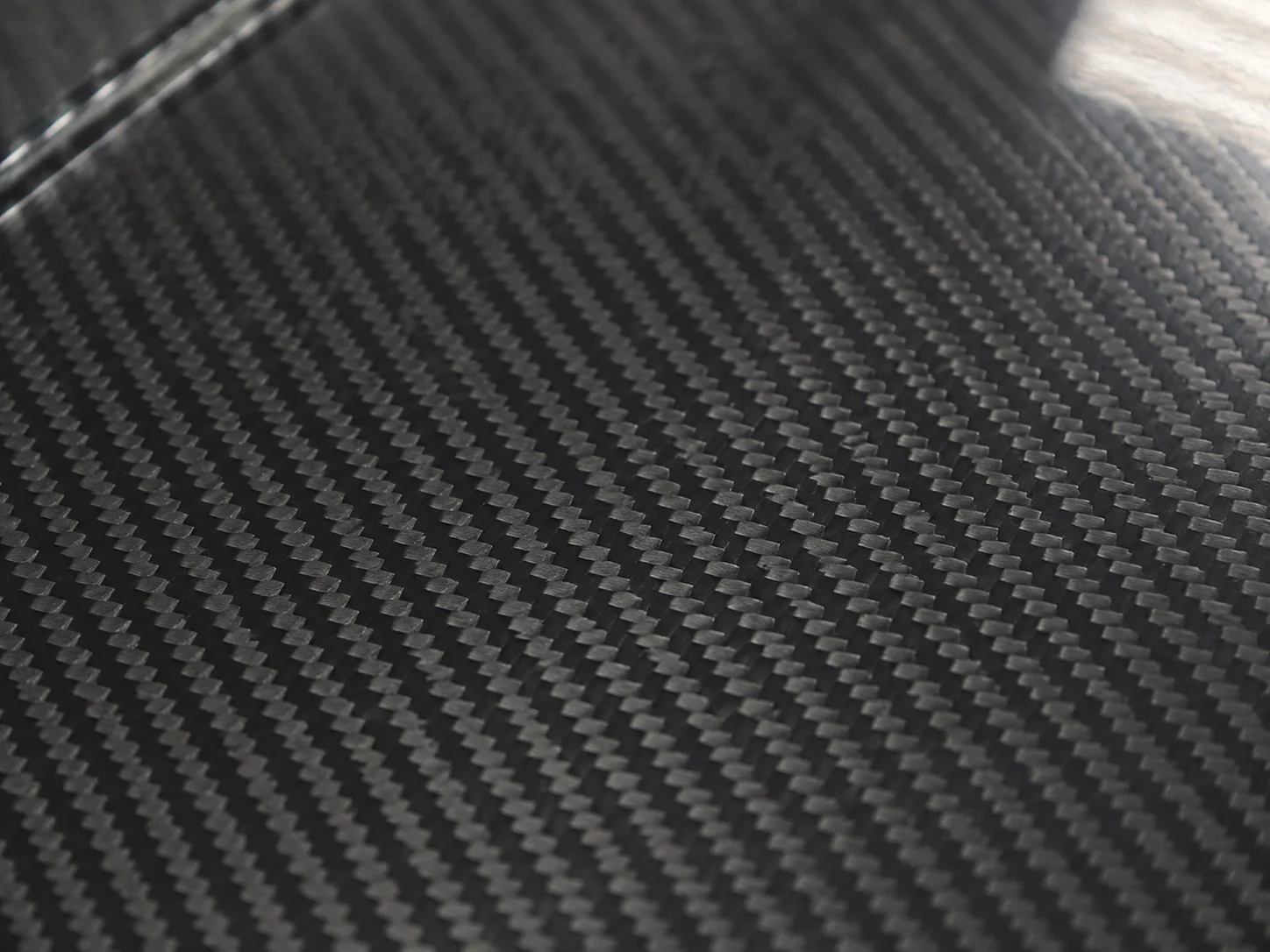
What does the visible pattern mean?
Separate appearance requirements from structural and process requirements
What is the delivered material or product?
Decide whether the next destination is Materials, Products or Custom Parts
Tow needs particular care because it is both a reinforcement input and a standalone material product. Prepreg, dry fabric and UD forms are not interchangeable either. Each changes the resin route, storage and handling, layup, tooling and forming questions.
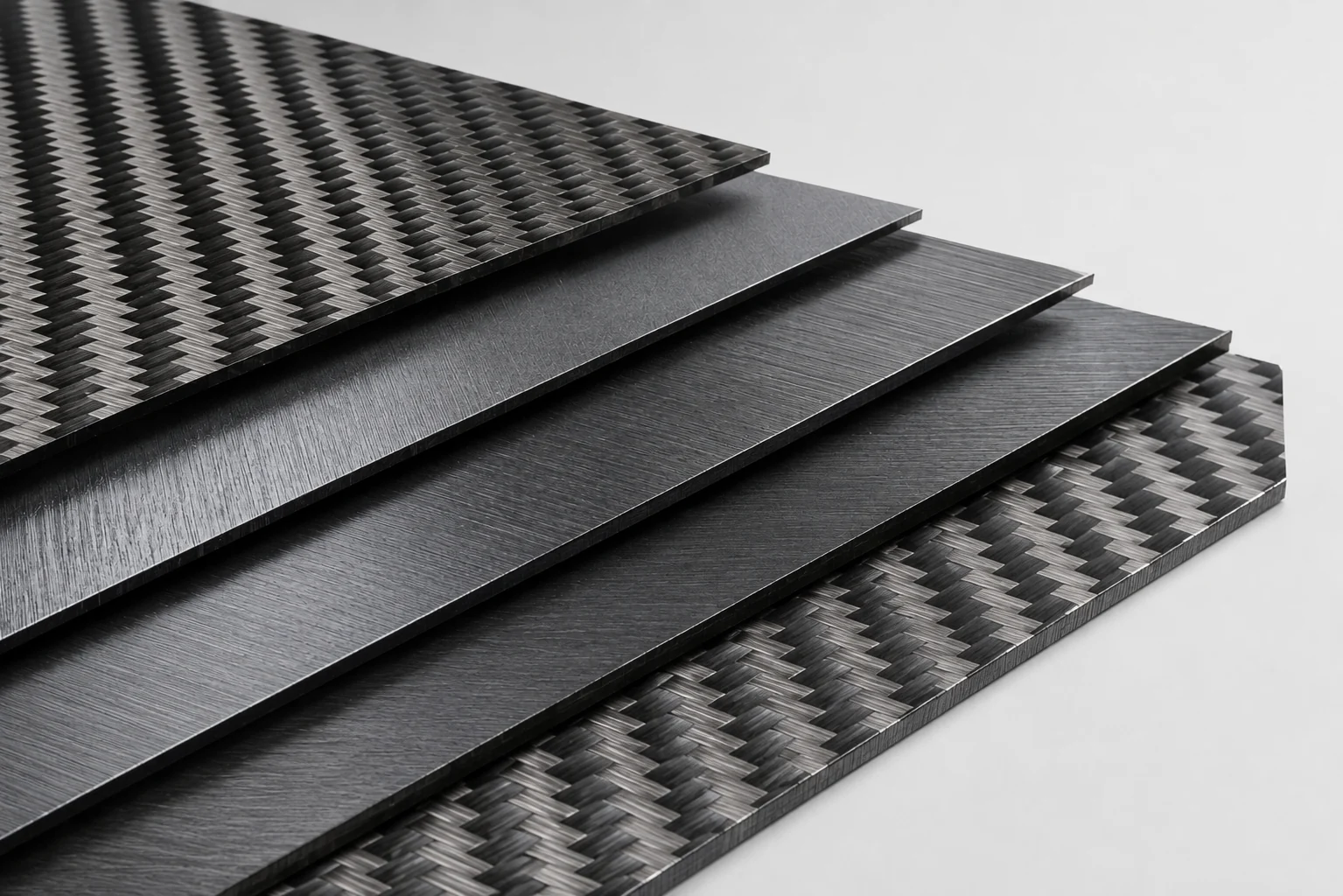
Treat weave and finish as separate appearance and layup inputs. To evaluate performance, also define the material grade, resin system, laminate construction and relevant part conditions.
“A-grade” is not a universal carbon fiber specification. One person may mean a clean visible weave; another may mean a material grade or a defect limit. Replace the label with things both sides can inspect: supplied form, weave direction, finish, allowed variation, viewing condition and governing drawing or specification. Where appearance must be matched, an approved sample (“Approved Sample”) can become the visual reference when the quotation or project plan includes it in acceptance.
Use this overview to understand the terms. Move to the Materials path when you need to evaluate what NEXWAVE can supply, in which form and under what specification. Start that review with the intended process or delivered form, not the material name alone.
Otherwise, you may receive material that cannot enter your process or a batch of visible parts that must be sorted, refinished or replaced because nobody fixed the weave and finish basis.
Choose the Process After You Understand the Part
Choosing a machine name too early can lock a part into the wrong tooling, surface, interfaces or cost structure. Start with what the part must look like when it arrives and works in the assembly. Then choose the manufacturing route.
The suitable route depends on geometry, material form, tooling, quantity, surface condition and verification needs. NEXWAVE uses these inputs to identify the relevant process family and the manufacturing stage to evaluate next.
If your question is “how is carbon fiber made?”, first decide whether you mean producing the fiber itself or converting carbon-fiber reinforcement and resin into a CFRP part. This knowledge path focuses on the second decision and directs upstream fiber-production questions to the appropriate specialist context.
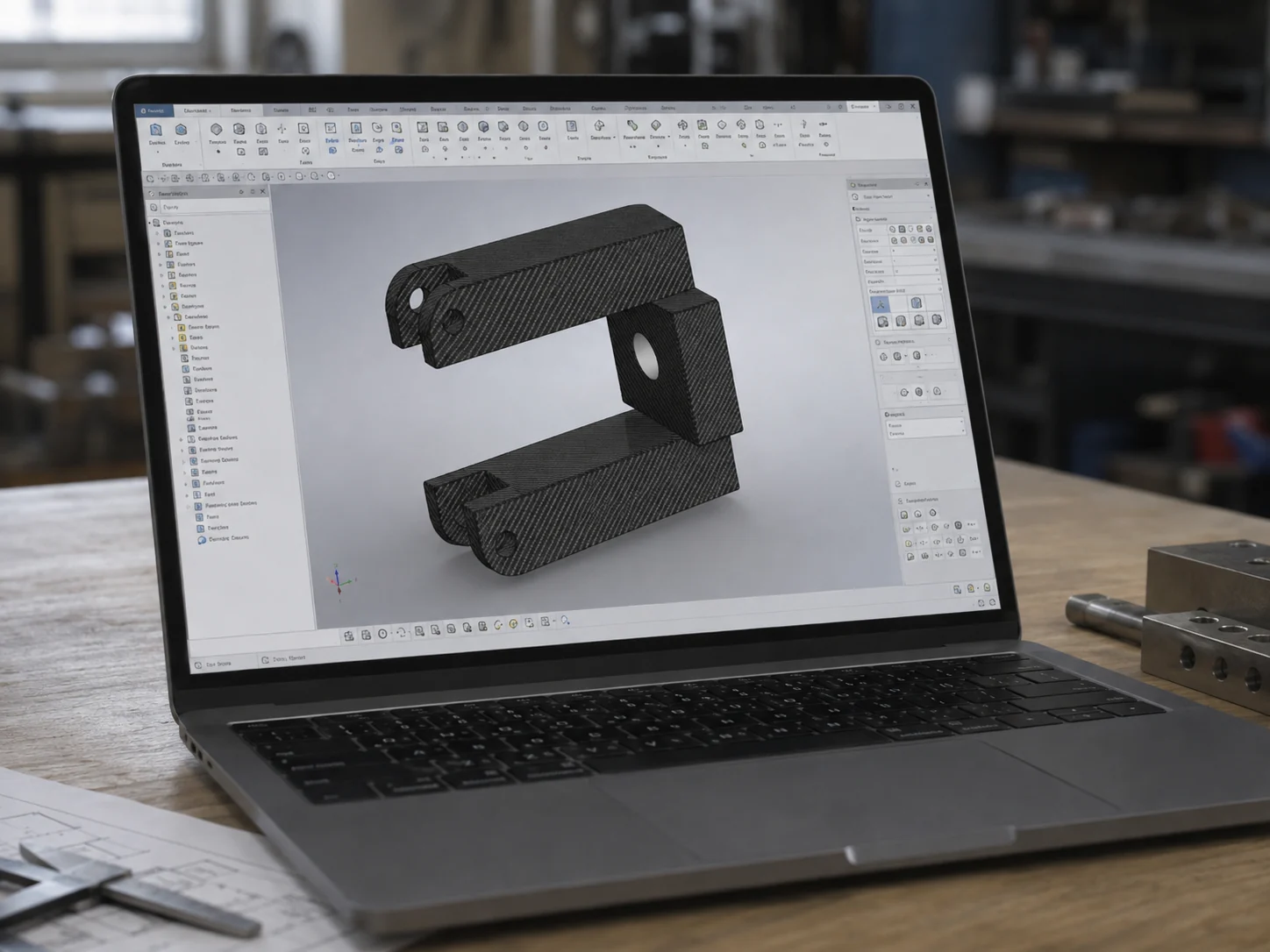
Inputs that change the route
size, depth, curvature, access, edges, holes, inserts, joints and assembly relationships.
dry reinforcement, prepreg, tube or sheet input, molding compound, core, adhesive and other system components.
concept, prototype, sample, pilot, limited production or repeat supply.
molded surface, exposed weave, painted finish, trimming, drilling, bonding, assembly and packing.
critical characteristics, inspection access, internal-condition questions, records and the source of acceptance.
Main manufacturing families and their decision jobs
Engineering and preparation
Whether the geometry, material, laminate, tooling and interfaces form a workable candidate route
Layup, forming and cure
Which forming family matches the material, geometry, tool and production condition
Machining and assembly
How the molded state becomes the required geometry and interface condition
Surface finishing
How visible and protected surfaces are carried into the delivered part
Inspection and packing
How critical features are checked and the part is protected for delivery
NEXWAVE organizes manufacturing questions across engineering, material preparation, layup, forming, machining, assembly, finishing, inspection and packing. These process families identify the next capability question; they are not a universal process recipe.
Replacing a metal part with carbon fiber is rarely as simple as copying the metal geometry. The load path, laminate direction, thickness changes, joints, holes, edges, tool access and forming route may all need to change together. If they are not considered early, the first sample may reveal the problem only after material and tooling money has already been spent. This Hub identifies the questions; detailed laminate design, dimensions and manufacturing rules belong to the engineering and Manufacturing review for the defined part.
Use this overview to understand why the route changes. Continue to Manufacturing when you need to evaluate actual process capability and supplier fit. Detailed parameters, inspection plans, deviations and production-transfer controls belong to the project-specific review. Define the route inputs first and you are less likely to pay for a sample remake, extra machining or another inspection round because a tooling or interface assumption was wrong.
Ask Whether Carbon Fiber Fits This Part, Not Just This Industry
“Used in aerospace” or “common in automotive” does not prove that carbon fiber fits your part. What matters is what the part must do, where it must fit, what it will face in service and who can approve the result.
Use the industry as context, then define the part’s function, loads, environment, interfaces, project stage and verification responsibility. These conditions determine whether the next step is properties, materials, manufacturing, comparison, validation or commercial review.
Conditions that make the application specific
Function and consequence
What must the part do, and what happens if stiffness, fit, impact response, surface or another feature is outside the required condition?
Loads and environment
What directions, cycles, vibration, impact, temperature, moisture or chemical exposure matter?
Geometry and integration
How does the part connect to surrounding hardware, structures, fasteners, adhesives, sensors or visible assemblies?
Project stage and quantity
Is the need exploratory, a prototype, an approved sample, limited production or repeat supply?
Quality responsibility
Who defines the drawing, critical features, test or inspection method, acceptance source and final approval?
Customer or regional conditions
Which customer specifications, destination requirements or regulated-use boundaries must be carried into the project?
The examples below show how the same decision logic applies across several applications; they are not a complete list of NEXWAVE industry paths.
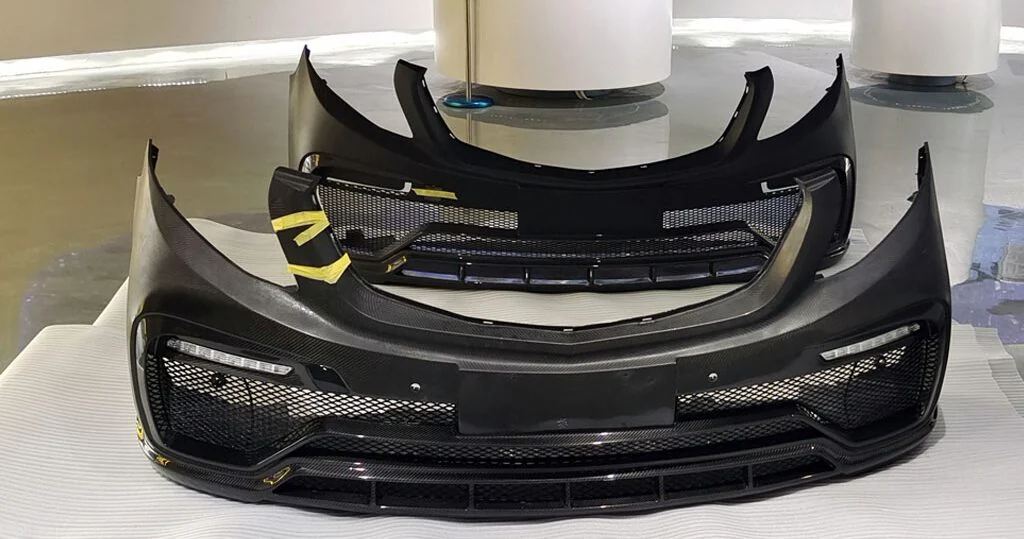 CAL · FITMENT
Automotive
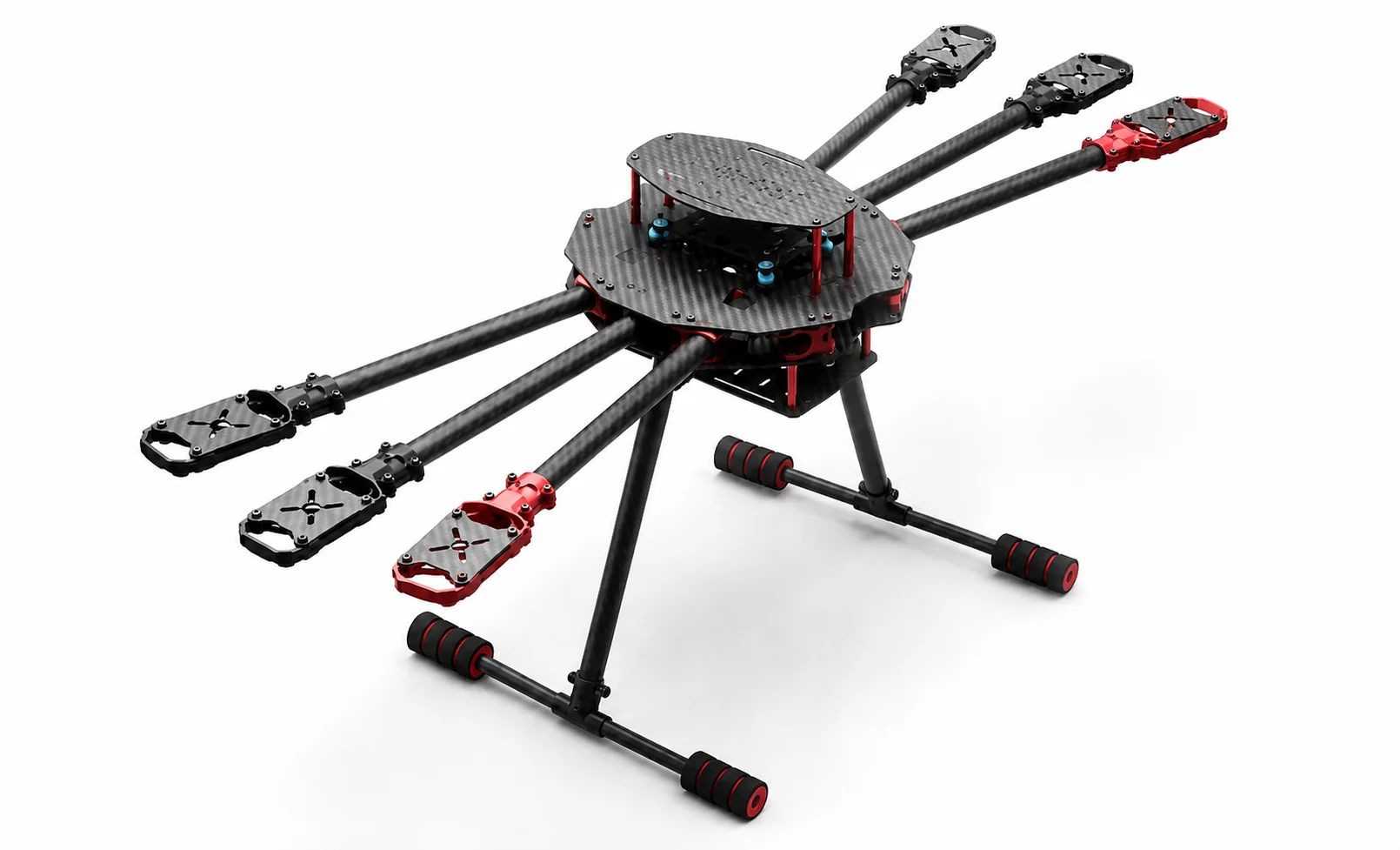 CAL · MASS
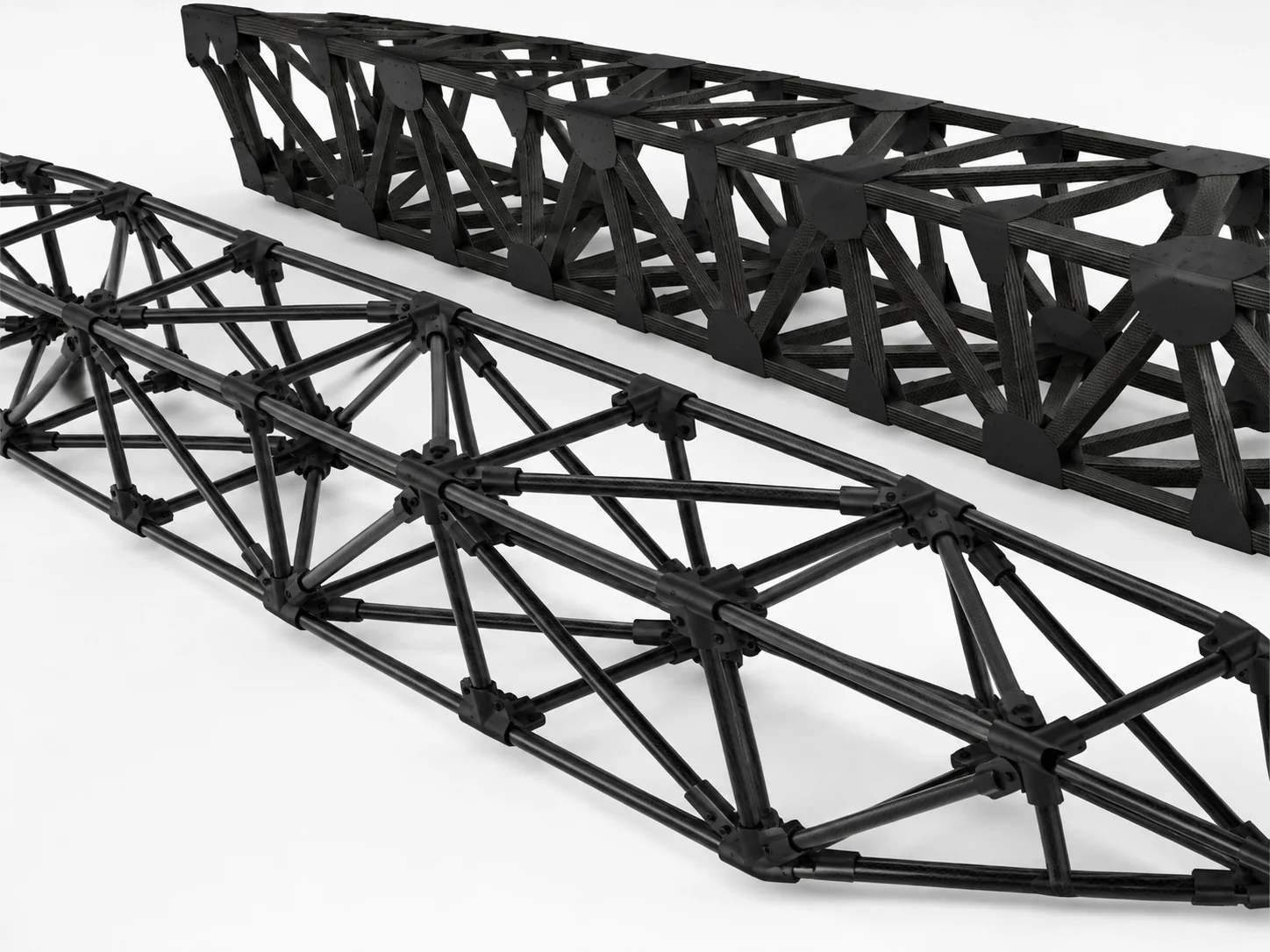
UAV and drones
 CAL · FATIGUE
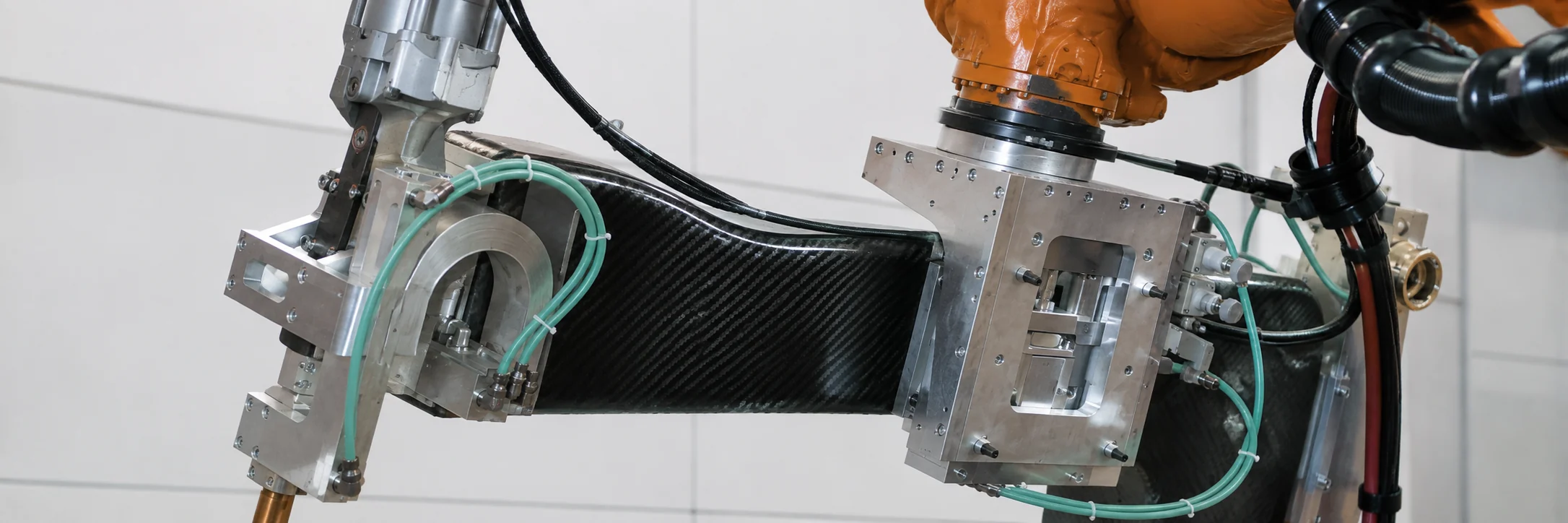
Industrial equipment
 CAL · REPEAT
Robotics
Other industries add different conditions, but the rule stays the same: start with the part, not a broad industry promise. For protective, aerospace-related, medical-related and other regulated projects, NEXWAVE can work to customer-controlled requirements and support applicable manufacturing or test activities. Product certification, airworthiness and medical-device approval remain with the customer, program owner, certification body or authority assigned to those decisions for the specific project.
Use the Industries path for application-specific context. Use a commercial page when the part and deliverable are already defined. If responsibility or validation is still unclear, submit the part context instead of asking whether carbon fiber is universally “suitable” for the industry. That can expose an unowned mounting, environment or approval condition before it causes redesign, failed installation or delayed program approval.
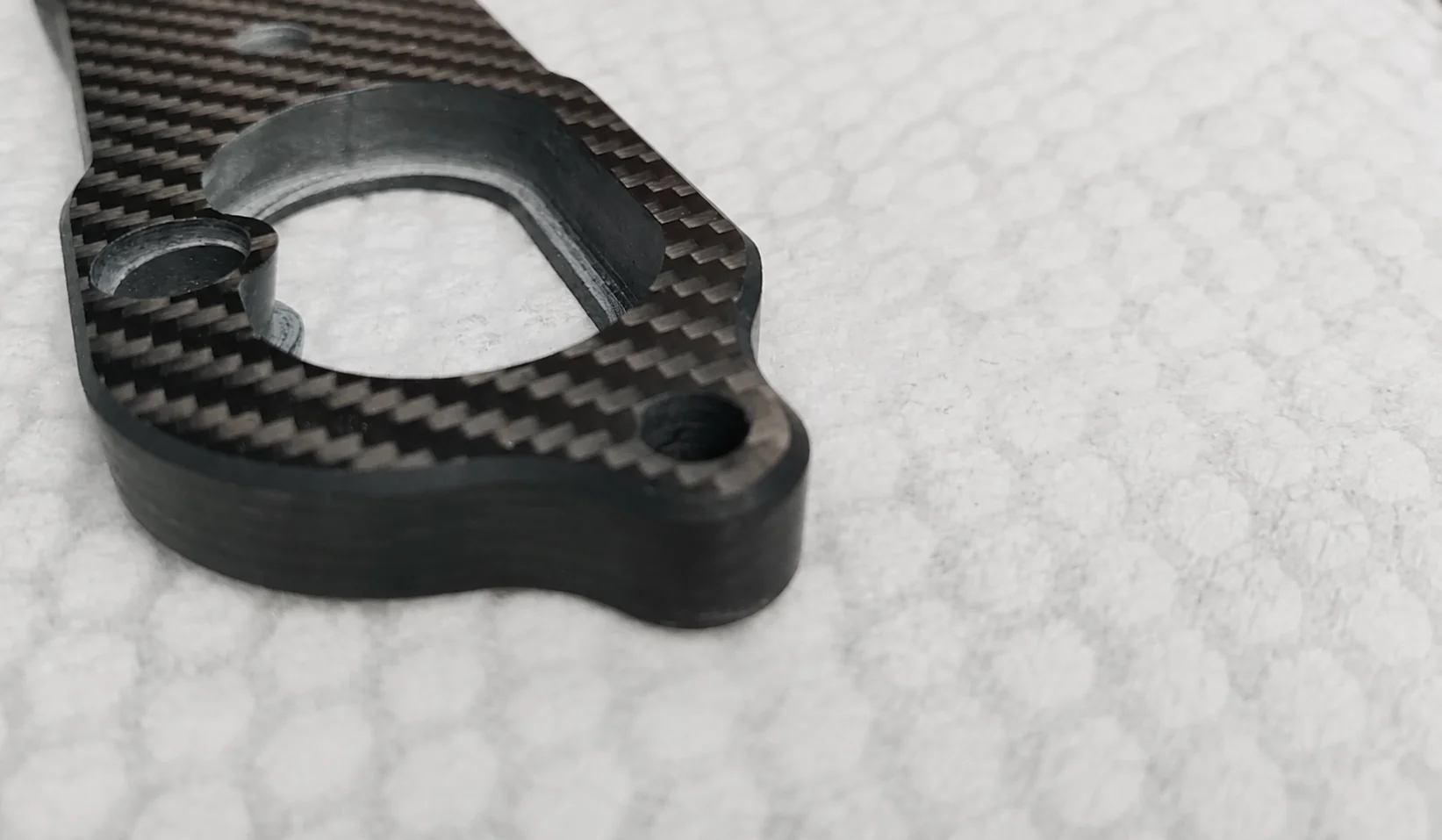 MEDIA TRANSITION — TWO OPTIONS, ONE JOB
Compare the Same Job Before You Call One Option Better
Most bad carbon fiber comparisons are not caused by bad data. They compare different things: a fiber value with a metal part, a coupon with a finished assembly, or raw material price with the cost of a delivered component. The winner looks obvious because half the job has been left out.
NEXWAVE uses a like-for-like framework before routing the question to the detailed comparisons guide. Align these dimensions first:
Object
Are you comparing fibers, material forms, laminates, parts, assemblies or manufacturing systems?
Function
Must the alternative carry load, control deflection, reduce moving mass, resist an environment, provide appearance or combine several duties?
Conditions
Are geometry, load direction, temperature, moisture, impact, fatigue and service life comparable?
Manufacturing
Do both options include realistic tooling, forming, machining, joining, finishing and inspection routes?
Cost boundary
Are you comparing raw material, one-time tooling, part production, finishing, quality, packing or total delivered responsibility?
Lifecycle
Are maintenance, repair, continued-use decisions, replacement and end-of-life conditions included consistently?
Do not start with a universal strength ratio. Decide whether you are comparing material data, a laminate, a finished component or a complete assembly. Then align the function, load direction, geometry, interfaces, service environment, manufacturing route and evidence. A lighter option that fails the deflection, impact, joining or inspection requirement is not a substitute for the same job.
This framework does not produce a universal winner. It shows what evidence a fair comparison needs. Use it to avoid choosing an option that looks lighter or cheaper at the material level but later needs redesigned interfaces, different inspection or a replacement part.
Continue to the Carbon Fiber Material Comparisons guide for structured questions; move to a project review when geometry, interfaces, quantity or acceptance determine the answer.
Find Out What You Are Actually Paying For
“Why is carbon fiber so expensive?” is usually several questions hiding inside one. Are you paying for the material, a tool, difficult geometry, machining, a visible finish, inspection, packing or the responsibility to deliver a finished part?
There is no single carbon fiber cost across material forms, processes and finished components. NEXWAVE separates one-time costs, per-part costs, quantity-sensitive costs and delivery costs before routing the question to detailed guidance or commercial review.
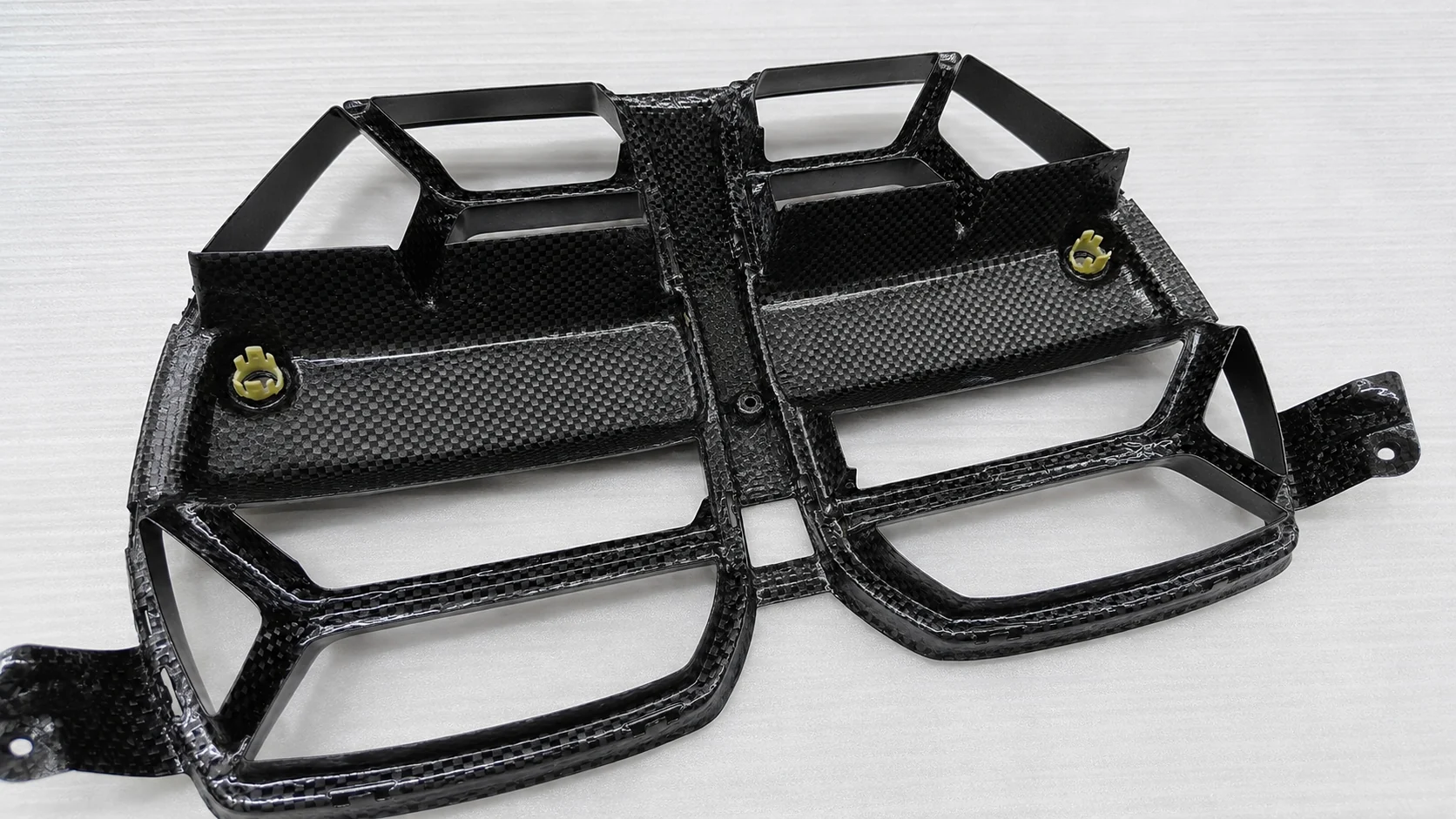
Main cost drivers
fiber grade, reinforcement form, resin system, laminate or molding-compound needs, cores, adhesives and process consumables.
part size, curvature, depth, access, tool concept, trim condition and interface complexity.
layup or forming route, cure, CNC machining, inserts, bonding, assembly and finishing.
sample, pilot, limited order, repeat order, yield assumptions and material planning.
tolerances, critical features, inspection, sampling, NDT, reports, traceability and release needs.
surface protection, packing, destination, transport, documents and trade terms.
One-time or project-start input
Is new tooling, engineering, fixture, program or sample work required?
Per-part manufacturing input
What material, process time, machining, assembly, finish and inspection apply to each part?
Quantity-sensitive input
How do setup, yield, material use, capacity and order size affect the reviewed route?
Delivery input
What protection, packing, documentation, destination and Incoterm must the quotation include?
“How much is a 2 mm carbon fiber sheet?” still leaves most of the quotation undefined. Add the use, width and length, thickness tolerance, laminate or material requirement, finish, edge or machining condition, quantity, packing and destination. State any critical inspection or documentation need. These inputs show whether you need material supply, an established product form or a project-defined part.
Different routes can have different MOQ, sample timing and production-planning conditions, so one universal number would mislead. Give NEXWAVE the object, geometry, quantity, material or performance basis, critical features, appearance and destination. Then we can explain what changes the quotation without promising a fixed saving or lead time.
If those inputs are missing, the first price may leave out tooling, machining, inspection, protection or freight. The buyer then pays through a second quotation, a change order or work needed to correct the delivered state.
 MEDIA BAND — EVIDENCE GATES AHEAD / 21:6
Do Not Trust a Test Until You Know What It Can Approve
A report can look official and still be useless for the decision in front of you. Before you accept a batch, reject a part or approve shipment, ask exactly what was checked, how it was checked and which requirement says the result is acceptable.
In this Knowledge Center, acceptance means the governing requirements, characteristics, methods, limits or approved references, records and approval authority used to decide whether an identified object or delivery is acceptable. NEXWAVE uses this framework to separate material data, laminate testing, process checks and finished-part acceptance.
Fiber or material form
Laminate or coupon
Manufacturing process
Finished part
Final delivery
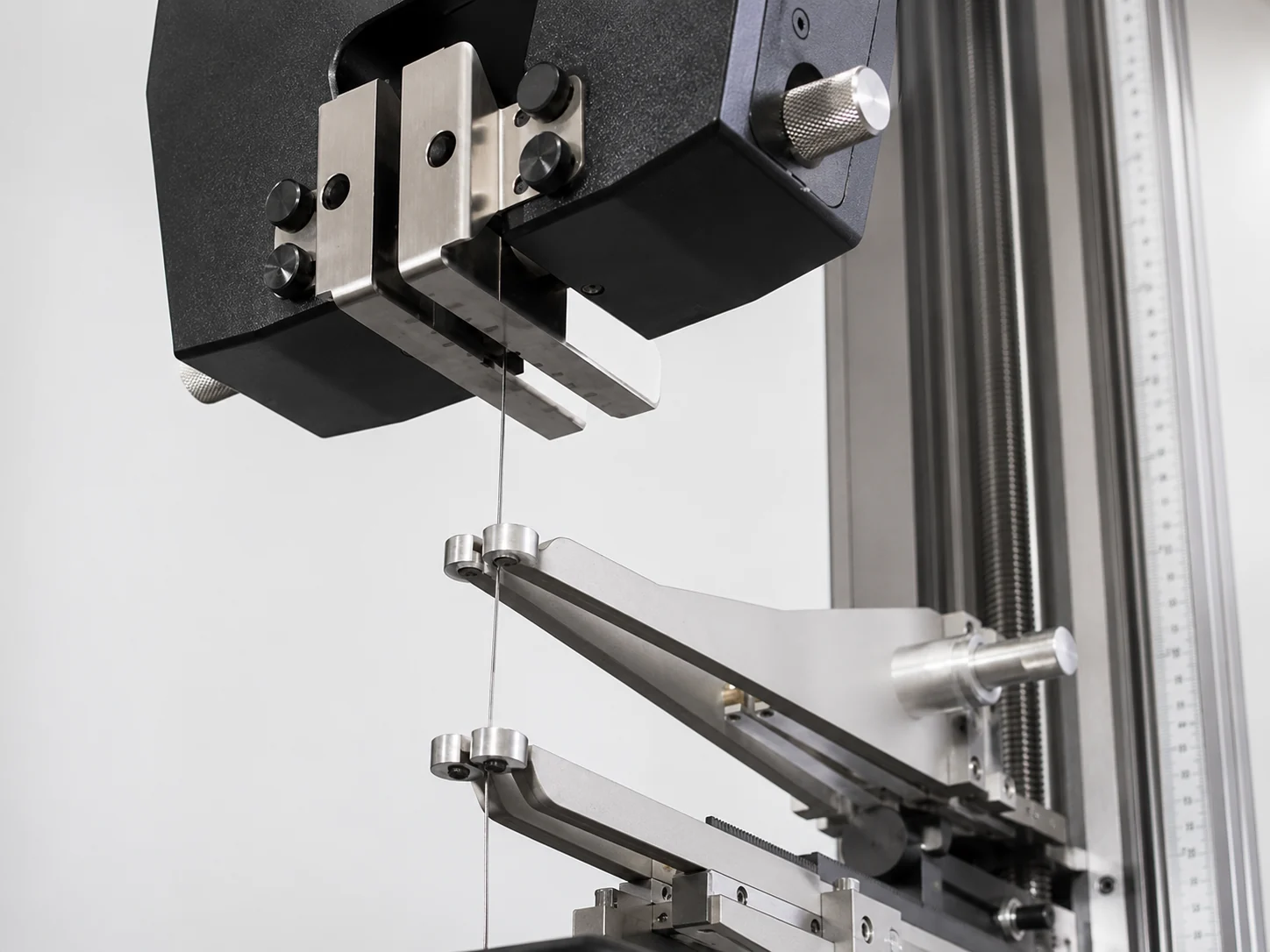
An equipment name is not evidence by itself. Tensile, flexural and compression tests apply to defined specimens and conditions. C-scan can support internal-condition assessment, but its sensitivity, interpretation and the acceptance basis still have to match the project. The method must answer the actual release question.
A project quality plan can place review or inspection gates at incoming material, layup, cure, first article, in-process work, NDT where applicable, final inspection and packing. Which gates NEXWAVE performs, coordinates or documents is confirmed in the project scope and applicable capability review. A QMS certification, material-compliance pathway or laboratory relationship answers a different question from product approval.
State the governing requirement, the characteristic to check, the method and condition, the limit or approved reference, and who can approve a deviation or release. The source may be a drawing, written specification, Approved Sample, contract requirement or project quality plan. “High quality” cannot replace any of them.
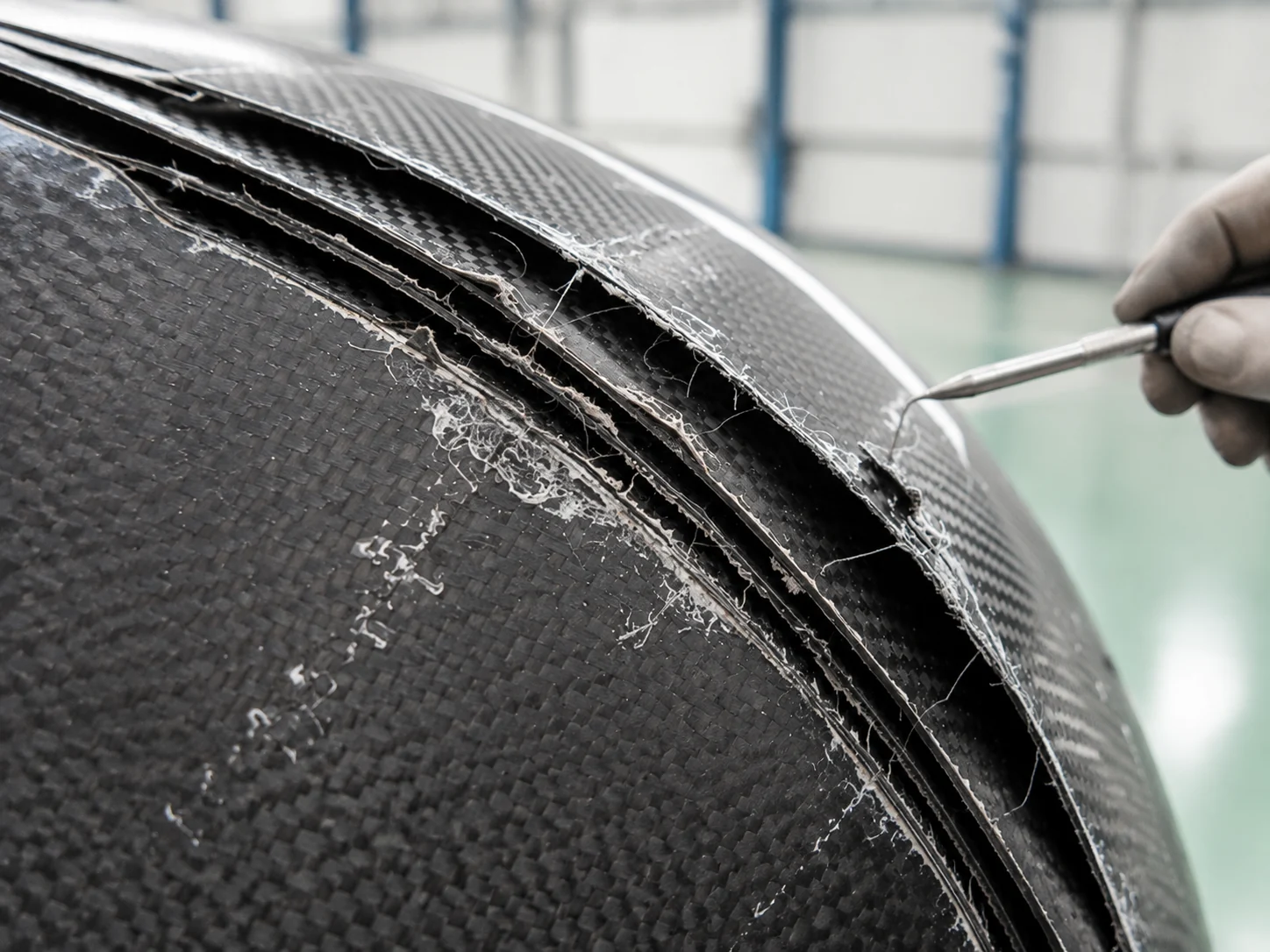
When something looks wrong, do not send only a photograph. Keep the governing acceptance source and version, clear photos, symptom and location, measurements with units and method context, order and lot identity, event or use context, and any machining, bonding, installation, transport or other downstream work. Record what changed after receipt. This package helps identify the affected scope and responsible review path. It does not, by itself, prove root cause, responsibility, remedy, disposition or release.
Match the evidence level to the decision
General technical explanation
Terminology, mechanisms and questions to ask
Cannot replace: project-specific conformity or release
Supplier or material document
Identity or stated supplied-condition information within its scope
Cannot replace: finished-part acceptance
Lot, process or inspection record
A recorded condition for the identified material, process stage or item
Cannot replace: conclusions outside the recorded object and method
Project test, inspection or approved reference
The defined project decision when object, method, condition and acceptance source align
Cannot replace: approval by an authority not assigned in the project
Use this framework to ask for evidence that can actually support your decision. For a specific part, test, drawing, customer standard or release record, continue to the relevant commercial page or submit the exact validation question. Tying evidence to the defined object, conditions and acceptance source helps stop the wrong record from releasing the wrong part. That can mean avoiding a batch sort after delivery, another installation visit or a warranty dispute over evidence that never covered the released condition.
A Damaged Part, a Repair and a Return-to-Service Decision Are Not the Same Job
When a used carbon fiber part is damaged, the first question is not “can it be fixed?” It is who is qualified and responsible to assess the damage, approve a repair and decide whether the part can be used again. Those are separate decisions, and each needs its own part history, technical basis and records.
Damage assessment
What is the reported condition, location and event context, and who is responsible for evaluation?
Repair
Is there an approved repair basis for this product and responsible authority?
Continued use
Who can accept the repaired or observed condition for the application?
Reuse, recycling or disposal
What material system, waste stream, process and regional route are involved?
Treat the stage as investigation context, not a responsibility finding. The same mark or crack can mean something different depending on whether it appeared during manufacturing, transport, installation or service. Preserve when it appeared, the order or lot identity, the work before and after the observation, and the governing acceptance source. A photograph or the timing alone cannot establish cause, responsibility or disposition.
If no guide matches your lifecycle issue, submit the part, material or process information, lifecycle stage and decision you need. NEXWAVE can identify the relevant guide, information gap or project path. The responsible engineering, maintenance, regulatory or end-of-life authority retains the final decision. Keeping those roles clear helps you avoid paying for an unauthorized repair, repeating an inspection or putting an unapproved part back into service.
NEXWAVE manufactures new carbon-fiber parts and can support material, process and design-for-manufacture discussions for new projects. NEXWAVE does not assess damage on used parts, design or perform repairs, or approve continued use. If you suspect a manufacturing nonconformance on a NEXWAVE order, send the order identity and available evidence to the responsible project owner.
End-of-life and production-waste routes depend on the material system, contamination, location and available qualified handlers. NEXWAVE can clarify project-related material information where available, while collection, transport, recycling and disposal arrangements must be confirmed with the responsible qualified route for the specific location. NEXWAVE does not present this Knowledge page as a blanket waste-collection or recycling service.
 MEDIA TRANSITION — FIVE DELIVERY DISTANCES
Choose the NEXWAVE Route by What You Need Delivered
Once the technical question is clear, do not send every project to the same sales route. Choose by what must arrive at your door and how much responsibility NEXWAVE needs to take. The five routes cover material supply, product forms, manufacturing capability, project-defined finished components and longer-term OEM/ODM cooperation.
Keep Supplier Scope and acceptance separate
The work NEXWAVE is responsible for, the delivered state, included operations, documents, packing and commercial boundary
The governing requirements, critical characteristics, methods, limits or approved references, permitted deviations, records and release responsibility
A capability statement tells you what can be evaluated. It does not put an operation, document or result into your order. The quotation and project plan define Supplier Scope. The applicable acceptance sources define what conforms and who can release it.
For projects that fit the Manufacturing route, the next review evaluates which material-preparation, forming, machining, assembly, finishing, inspection, packing and delivery capabilities are relevant to the part. The actual in-house, coordinated and included supplier scope is confirmed on the Manufacturing page and in the project quotation rather than assumed from this Knowledge overview.
For broader company and factory context, visit the NEXWAVE Home page. For a project-specific next step, use one of the five routes above. After the commercial route is selected, suitable Manufacturing, Custom Parts and OEM/ODM projects can continue through prototype, engineering sample, appearance sample, pilot, low-volume and repeat-production stages. The detailed development sequence is handled within the selected project path.
If You Are Still Unsure, Send the Question as It Is
You do not need to know the right carbon fiber term before you contact NEXWAVE. Tell us what is happening, where the project is stuck and what you need to decide. We will use that context to identify the relevant guide or commercial path.
Object and use
What material, part, process or application is involved, and what must it do?
Decision
What do you need to learn, compare, source, validate or resolve next?
Conditions
Which loads, environment, geometry, interfaces or downstream operations matter?
Acceptance
Which drawing, specification, Approved Sample, customer requirement, test or inspection condition controls the decision?
Stage and quantity
Is this learning, concept work, a prototype, an order issue or repeat supply, and what quantity or affected scope is involved?
Evidence on hand
Identify any drawing, CAD model, sample, photographs, measurements, reports, order or lot information you already have.
Unknowns are acceptable. Mark them as unknown instead of guessing. A technical question can begin with less information than a formal RFQ. Start with the written snapshot; when supporting files are relevant, NEXWAVE can confirm the appropriate continuation method.
The first response can identify the right path or the next information needed, so you do not have to explain the same drawing or issue in several unrelated email chains. Engineering conclusions, compliance decisions, manufacturability results, diagnosis, approval and formal quotations still require the appropriate project review.
Submit a Technical Question
Describe the object, the decision and the conditions. We route it to the guide or the commercial path that owns the answer.