
Request a Carbon Fiber Project Review
Start with what you know. Share the part's job, project stage, quantity, requested work and acceptance needs so NEXWAVE can identify the right review depth and next practical step.
Choose the Right Review Depth for What You Know Today
A useful first review should help you avoid an expensive wrong turn before tooling, samples or production work begins. The information you provide helps NEXWAVE:
Start with a quick question, provide the essentials for a project review, or open a structured engineering review. Every route reaches the same NEXWAVE review inbox. The website does not upload or store drawings, CAD files or commercial documents; our team will reply by email to continue the file exchange.
identify weight, fit, surface, interface and inspection questions before they become a rejected or repeated sample;
separate the work NEXWAVE must deliver from the conditions used to accept the finished order;
match the review to the current project stage, quantity and tooling position instead of assuming one route fits every program;
start from written information without placing sensitive drawings or commercial files in a public form.
The first review is a project assessment. It is not a final quotation, design approval or production release.
Choose one of three review options. Click the option that matches your project today. The highlighted option is active, and you can move to a deeper review later without repeating information already shared by email.
Your Project Review Request Has Been Received
NEXWAVE will confirm the request by email, identify any missing information and reply with the appropriate review and file-exchange path.
No drawings or files are uploaded or stored by this form. Submit the written request first. NEXWAVE will reply by email so drawings, photographs, CAD files and commercial documents can be sent through the agreed email thread. Raise NDA needs before sending sensitive information.
Define what the part must do before choosing material and process
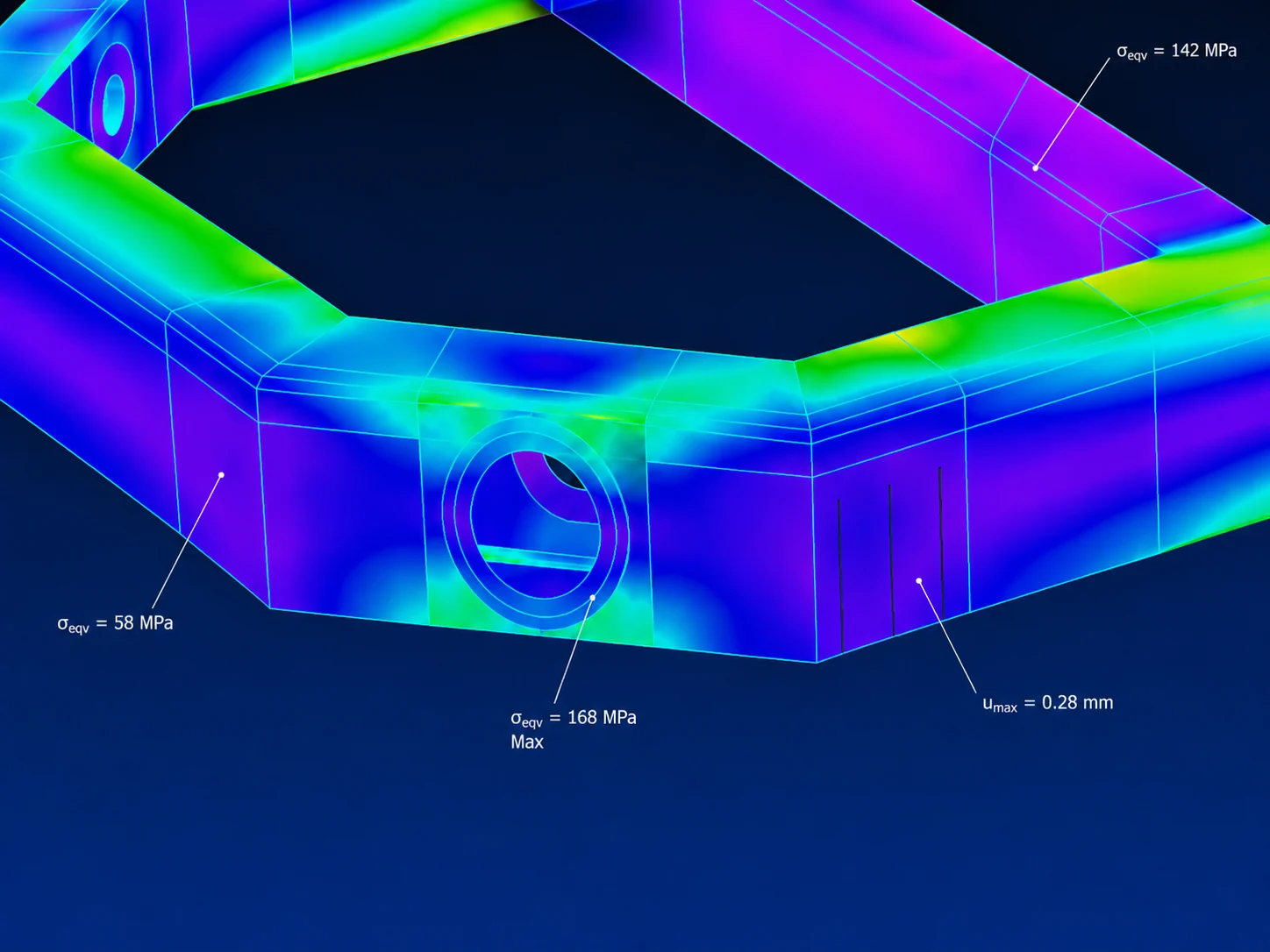
Start with the result the part must achieve in service. Defining function, load path, interfaces, environment and appearance before selecting a material or process helps avoid a sample that is too flexible, misses its weight target, will not install or has the wrong visible finish. That can prevent another sample cycle, installation modification and approval delay.
NEXWAVE reviews these requirements before recommending how the material form, laminate, tooling or manufacturing route should be evaluated. A material name or copied metal geometry can hide the decisions that control a composite part. NEXWAVE's team of more than 30 composite-material design engineers can review load path, laminate and interface needs, reinforcement, process fit and manufacturability for the project. The final choice still depends on the agreed part definition and validation plan.
Function and load
Explains what the part must carry, support, protect or position, and where stiffness, weight or deflection matters.
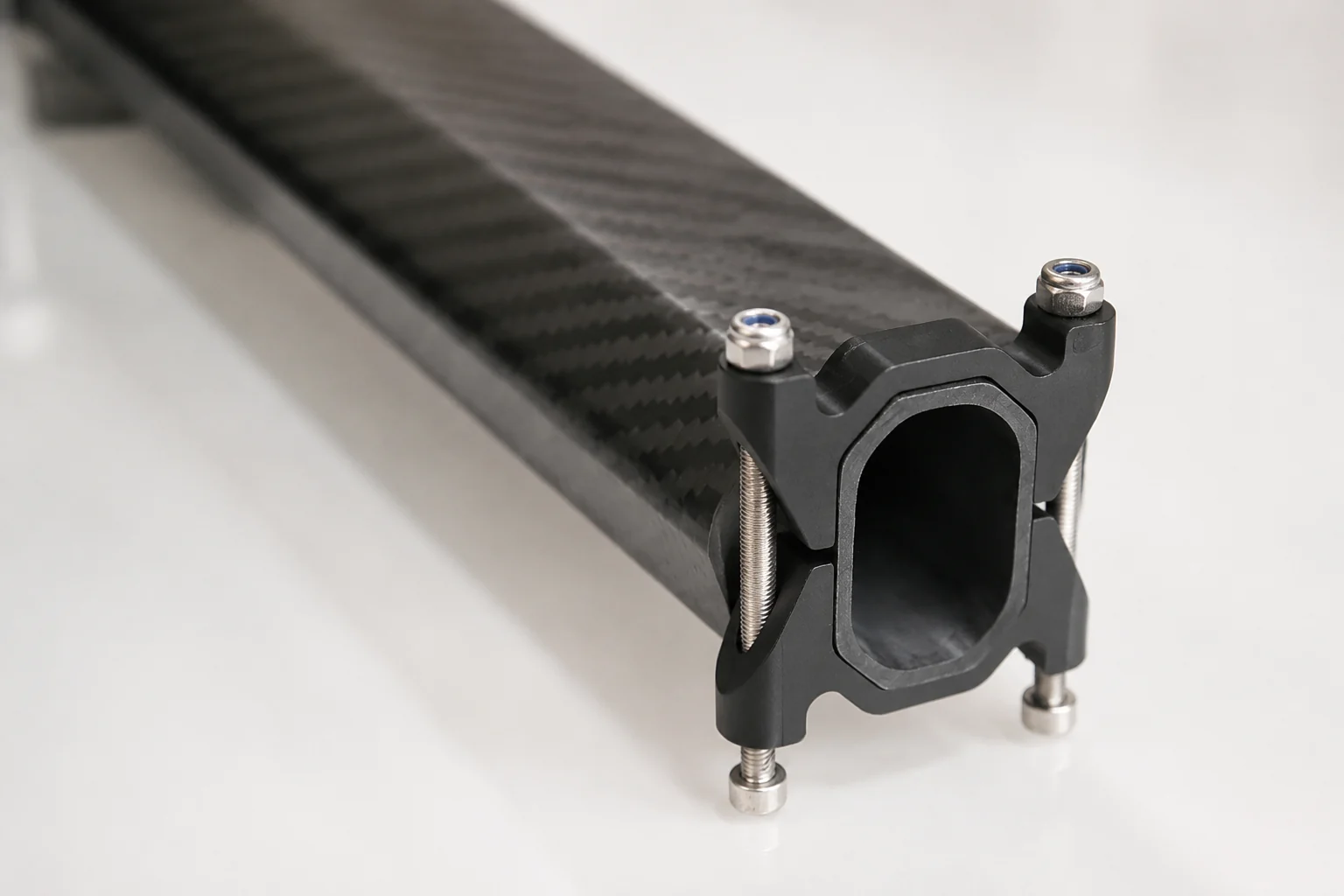
Interfaces and fit
Identifies mounting points, mating surfaces, holes, inserts, bond areas and installation limits that must work together.
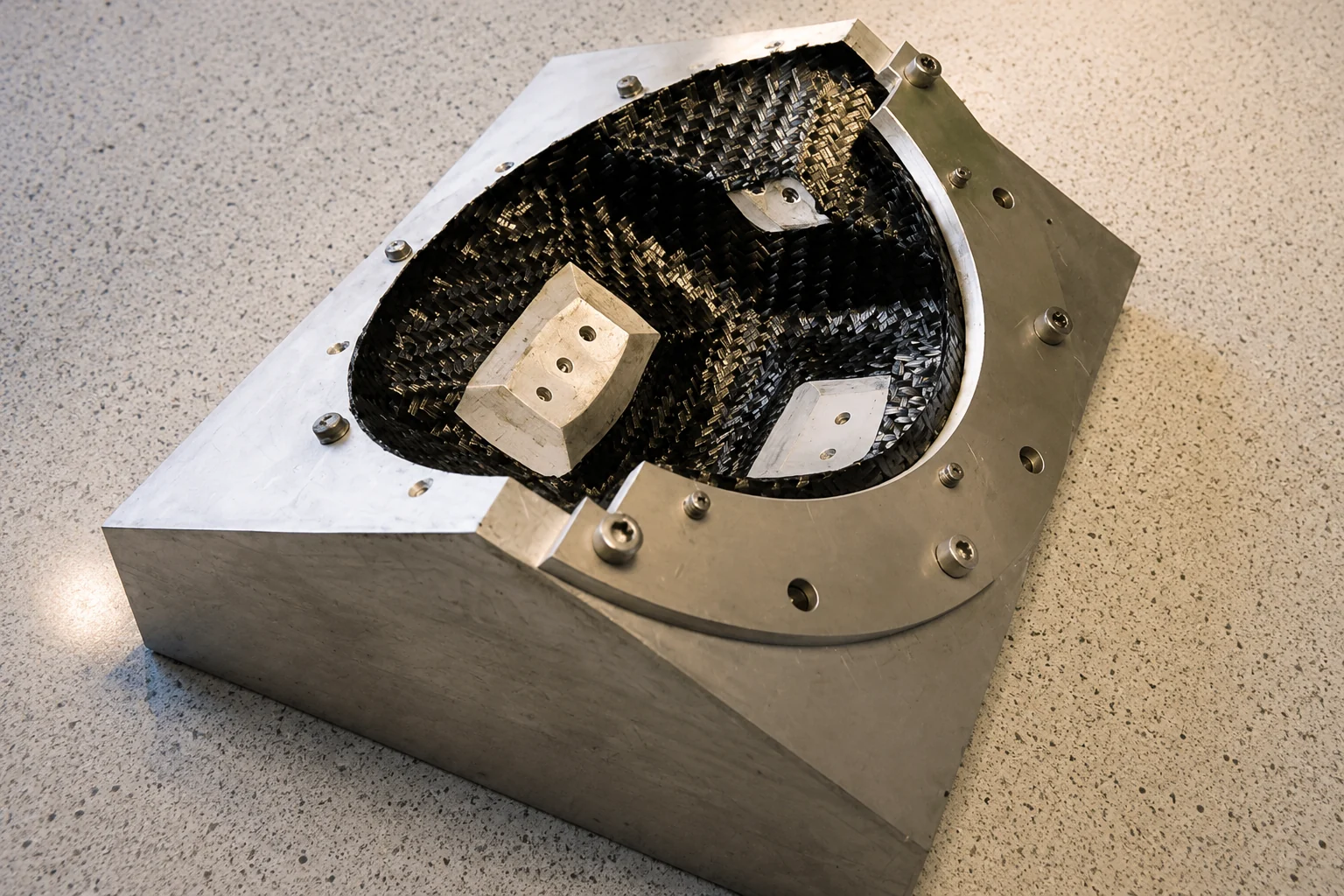
Service environment
Shows whether temperature, moisture, chemicals, fatigue, impact or exposure changes material and process decisions.
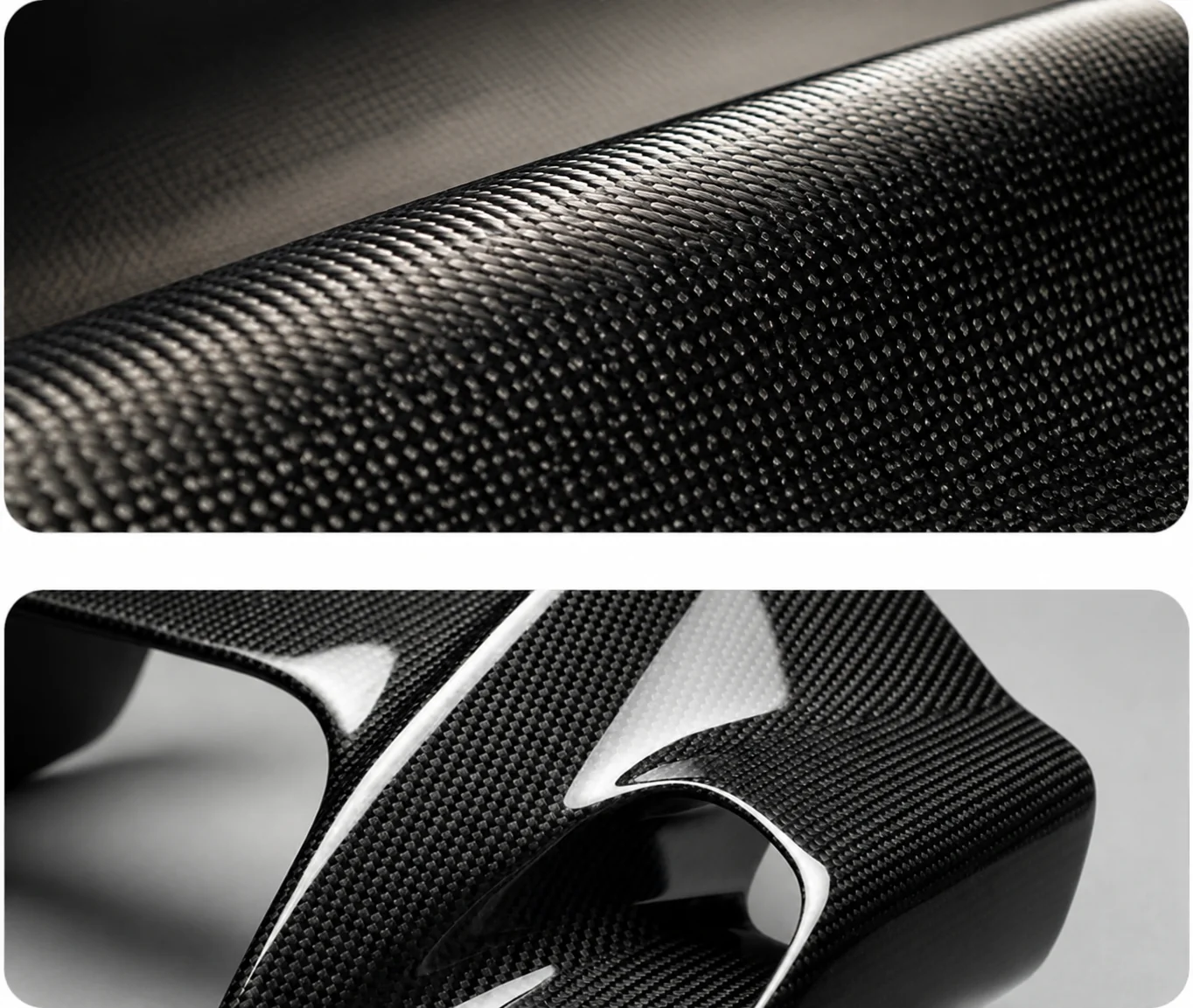
Appearance and failure consequence
Separates visible-surface expectations from structural needs and identifies what cannot be allowed to happen in use.
Mark each decision as specified, target outcome or open for review
A customer-controlled requirement, such as a material grade, interface, envelope, standard or approved finish.
The result the part must support, such as stiffness, weight, fit, temperature resistance or surface quality.
A material, laminate, tooling or process decision you want NEXWAVE to evaluate against the stated result.
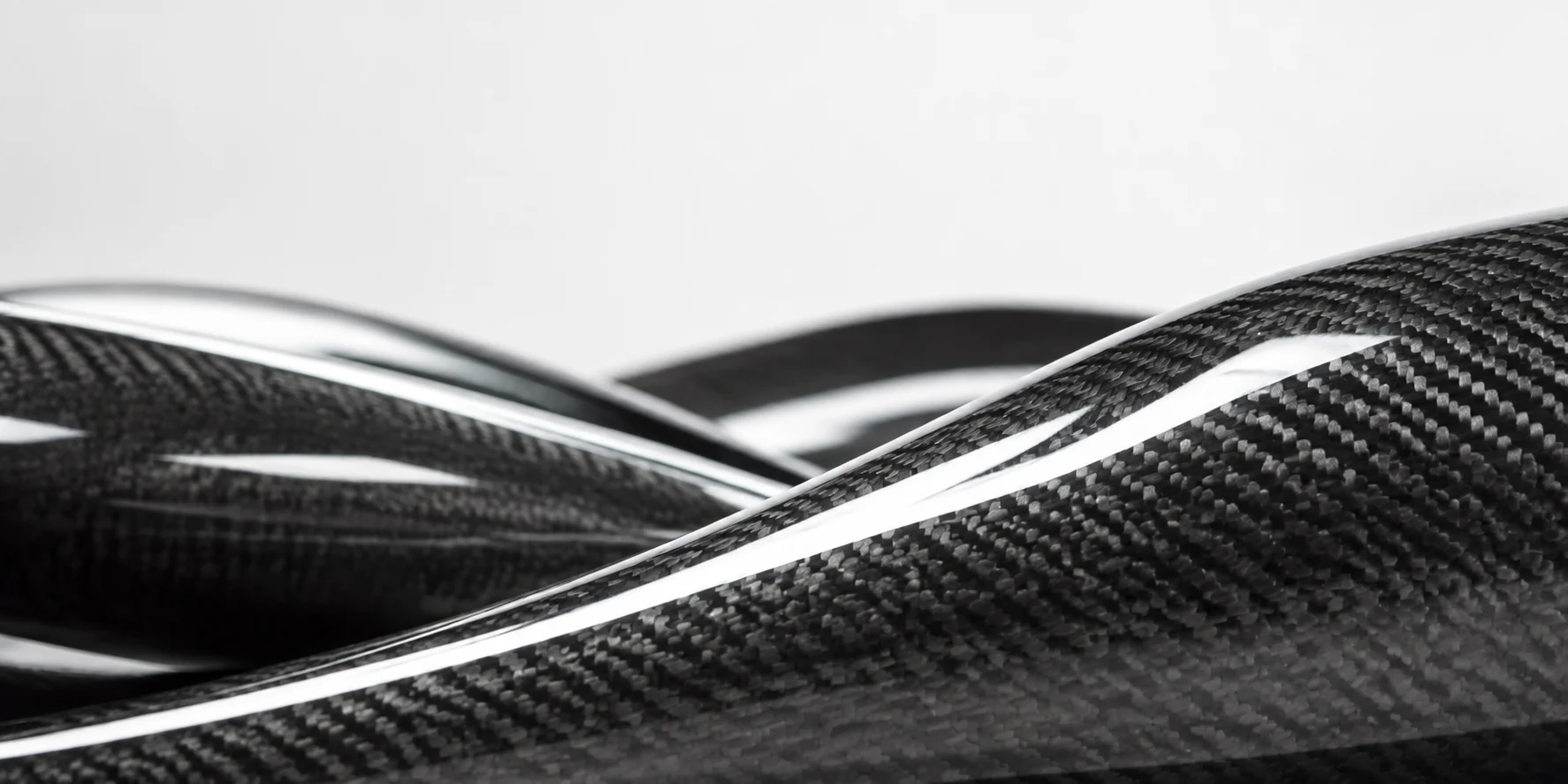
This distinction protects the requirements you control while showing where engineering options remain available. It also produces a more useful carbon fiber RFQ because each recommendation and price assumption can be tied to the same intended result.
Identify the controlling definition before quotation or machining
Your technical sources do not all need to be complete, but their roles must be clear. Marking the controlling revision, references and open conflicts helps prevent work from starting against the wrong geometry or tolerance basis. That reduces exposure to remade parts, replacement freight, redrilling and installation changes, and it protects the approved definition used for repeat orders.
NEXWAVE reviews the current revision, the purpose of each source and any known conflict before treating the information as a basis for DFM, quotation or production planning. A 3D model usually communicates geometry, while a 2D drawing or written requirement may control tolerances, datums, threads, inserts, finish, inspection and other details. NIST's model-based definition guidance explains why a model must carry or be paired with the product information needed for a complete definition. ASME Y14.5 connects dimensional communication to form, fit, function and interchangeability.
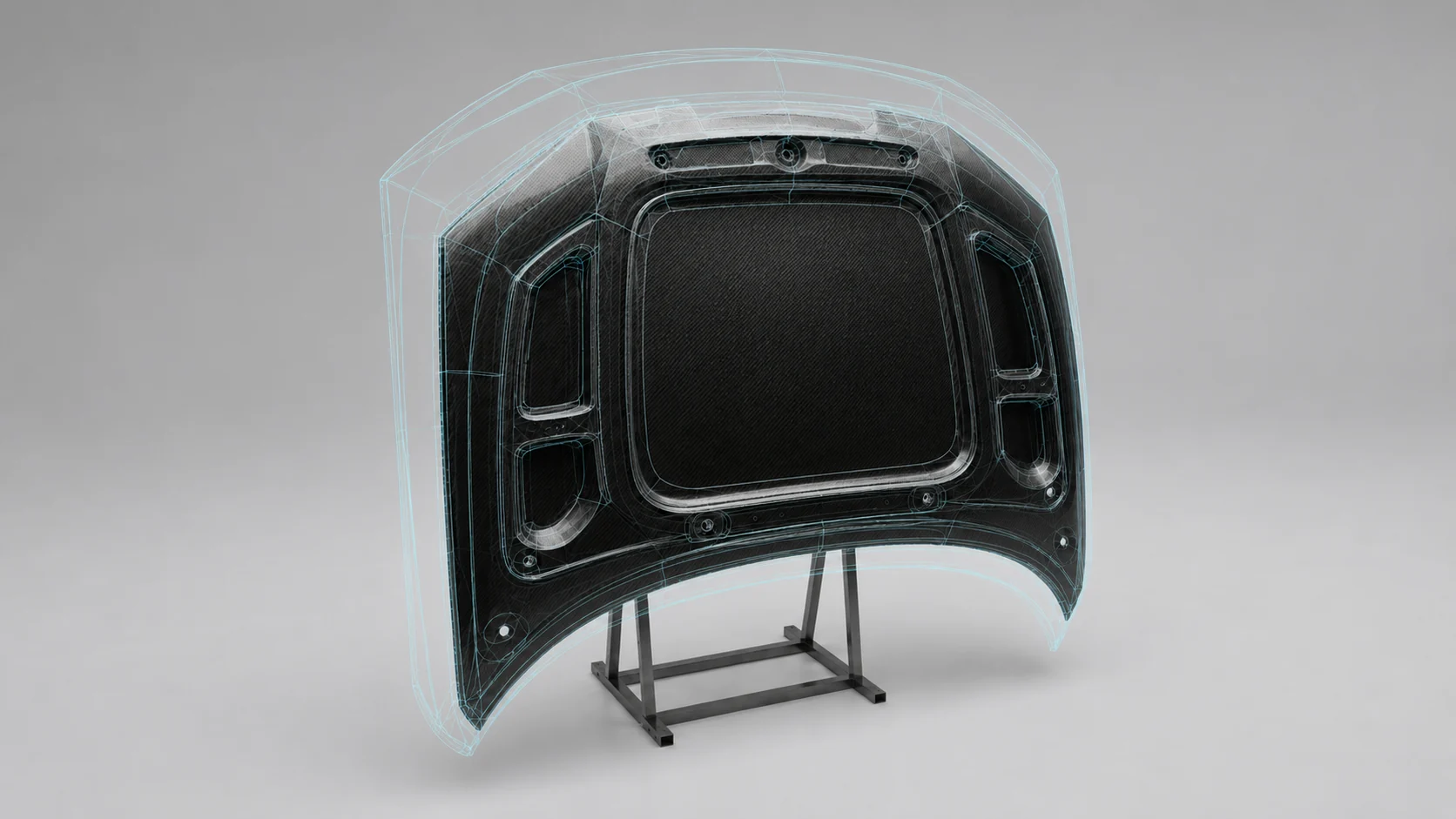
Fig. 03 — One controlling revision. Every check ties back to it.
For each source, choose one status:
Use this revision or requirement as the current basis for review.
Use it to understand shape, context, appearance or the existing condition, but not as the sole production authority.
The item is missing, inconsistent or awaiting a customer decision.
Supported engineering formats include STEP/STP, IGES/IGS, Parasolid, SolidWorks, Inventor, CATIA, Pro/E/Creo, DXF, DWG, dimensioned PDF and STL. State the native CAD version where relevant. These files are exchanged after the written form, in the NEXWAVE reply email conversation.
If two sources conflict, tell us which one currently takes priority and who can approve a correction. That gives both teams one basis for quotation, change review and later production.
Match engineering depth to project stage, quantity and tooling reality
Project stage and expected demand determine how far the first review should go. Matching the route to the current stage helps avoid production-tool investment while a concept is still changing. It also helps prevent a sample from being approved without the fixture, inspection and repeatability work needed for the planned order.
NEXWAVE uses the current state, next quantity, repeat demand, existing tools and approved references to decide whether the immediate need is definition, prototype learning, pilot validation, repeat production planning or supplier transfer.
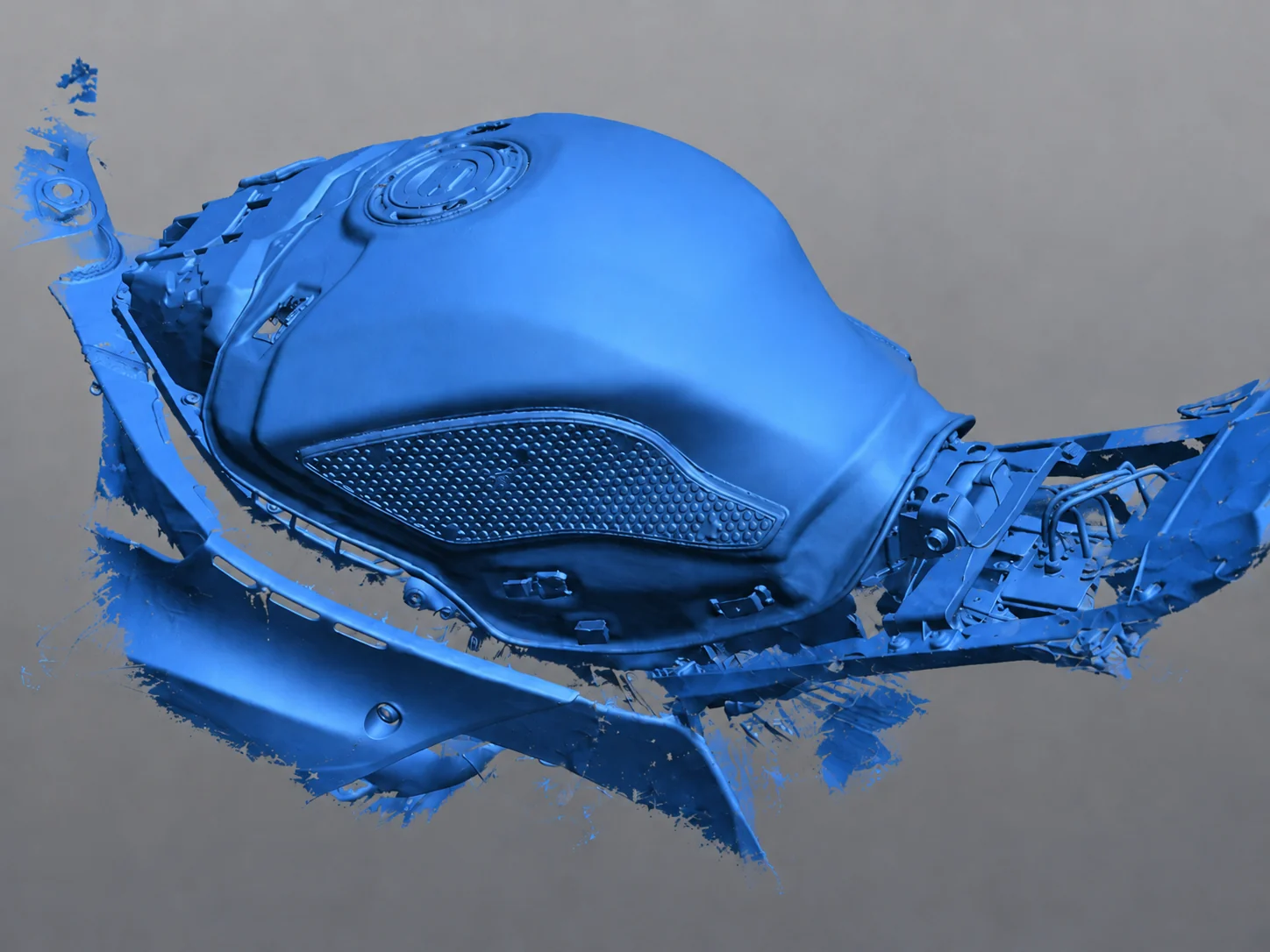
Concept or reference item
Clarify function, geometry source, open engineering decisions and the next definition step.
Useful evidencePerformance target, installation context, photographs or sample description, envelope and key interfaces.
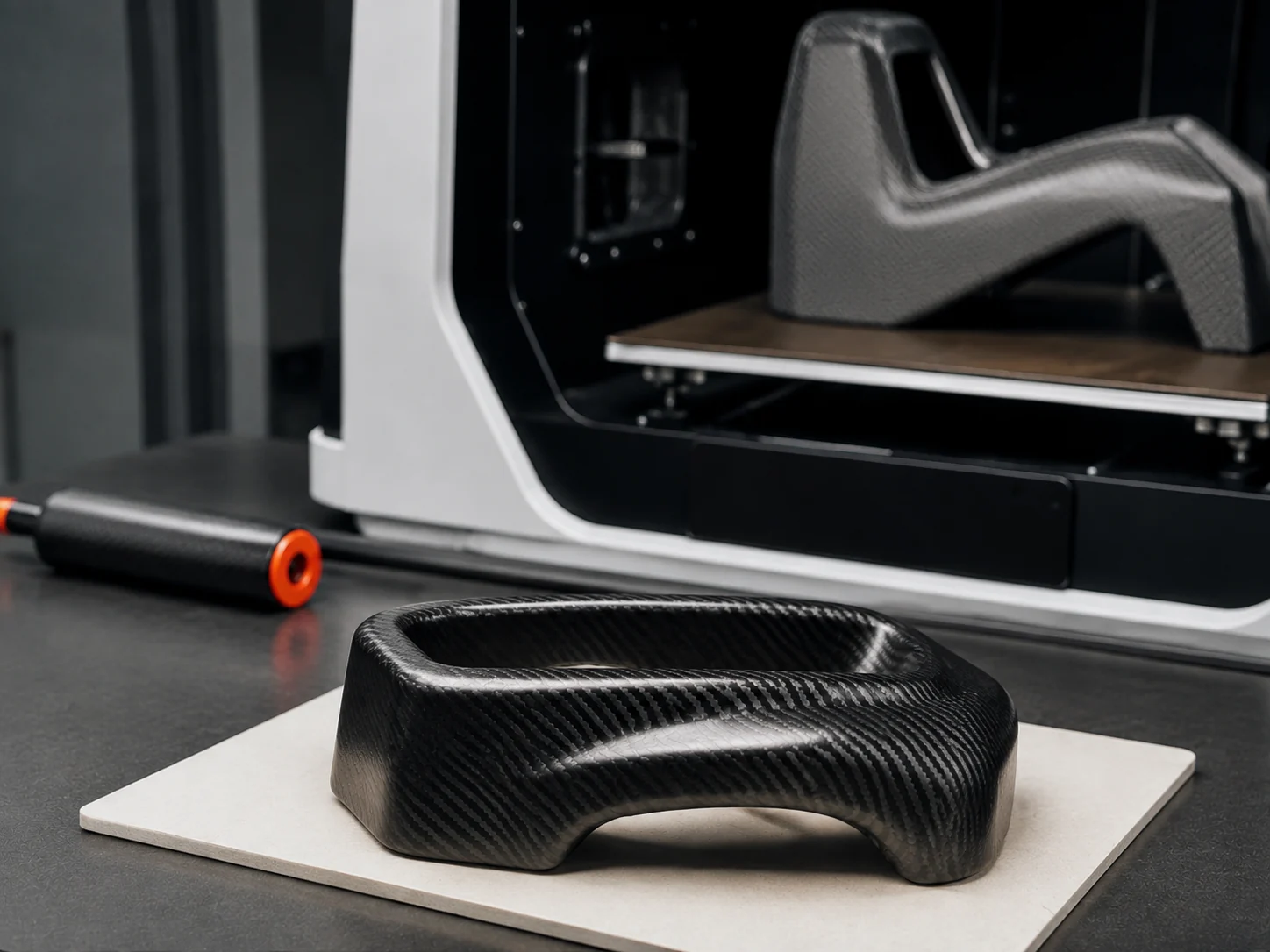
Prototype or engineering sample
Decide what the sample must prove and which tool, material, process and checks suit that objective.
Useful evidenceCurrent CAD/drawing status, sample purpose, quantity, appearance or structural target and approval owner.

Pilot or low-volume production
Align repeatable work, tooling readiness, inspection, packing and the conditions for moving forward.
Useful evidenceApproved sample, current tool/fixture status, planned quantity, key characteristics and trial feedback.
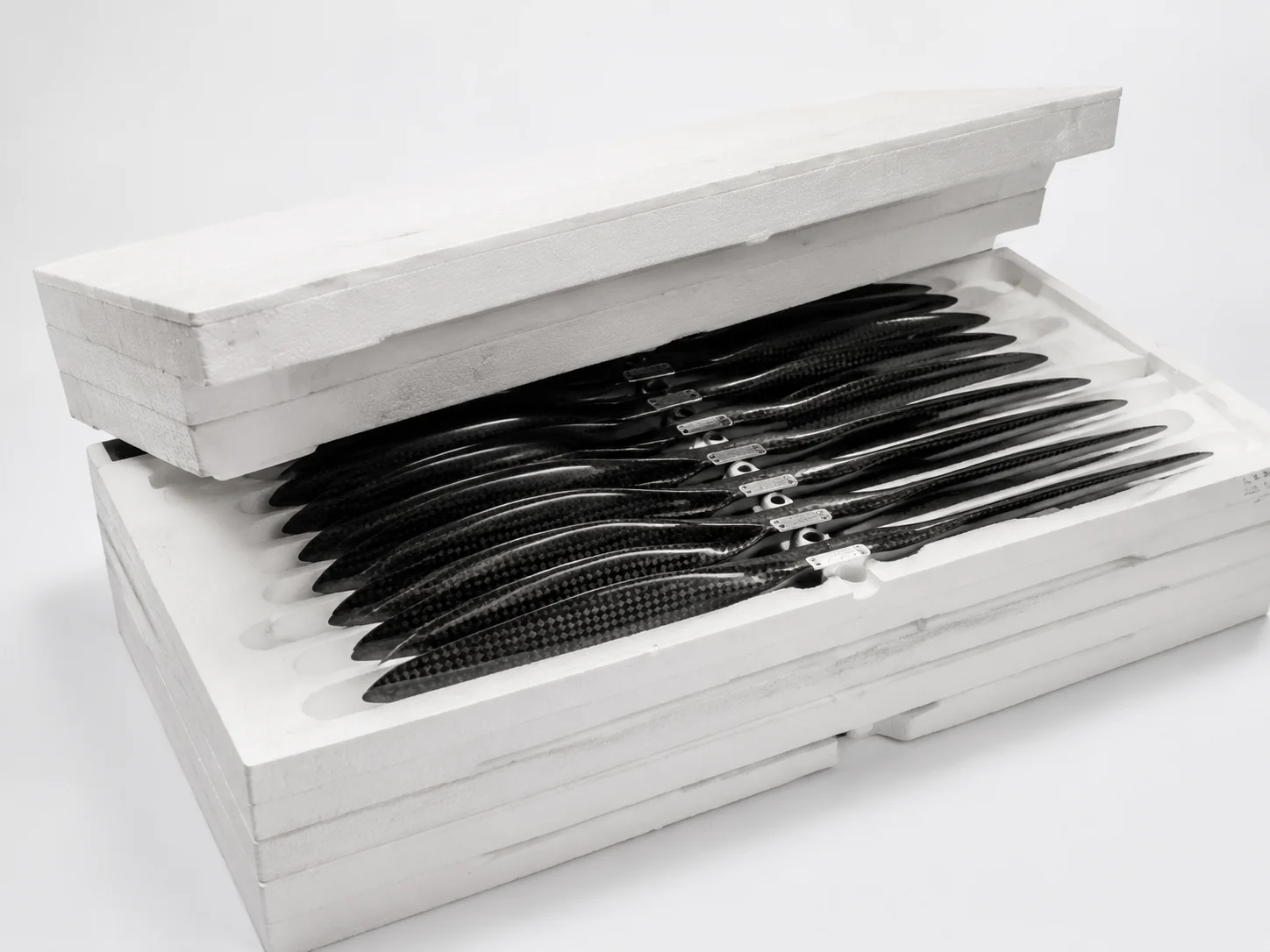
Repeat production or supplier transfer
Protect the approved part definition while identifying necessary changes, missing records and continuity risks.
Useful evidenceCurrent drawing and revision, approved sample, material/process baseline, tooling ownership, inspection plan, issues and demand.
Quantity alone does not select a tooling path.
Geometry, cure temperature, visible-surface needs, datum strategy, validation purpose and future volume also affect whether a prototype, appearance, structural-validation, low-volume or production tool is suitable. NEXWAVE reviews those variables before assigning tooling work or carrying an existing tool into the proposed Supplier Scope.
Share both the next-order quantity and the likely repeat demand. They separate a one-time sample need from the work required for repeat supply.
Quantity and timing at this stage are planning inputs, not a fixed MOQ, quotation or manufacturing lead-time promise.
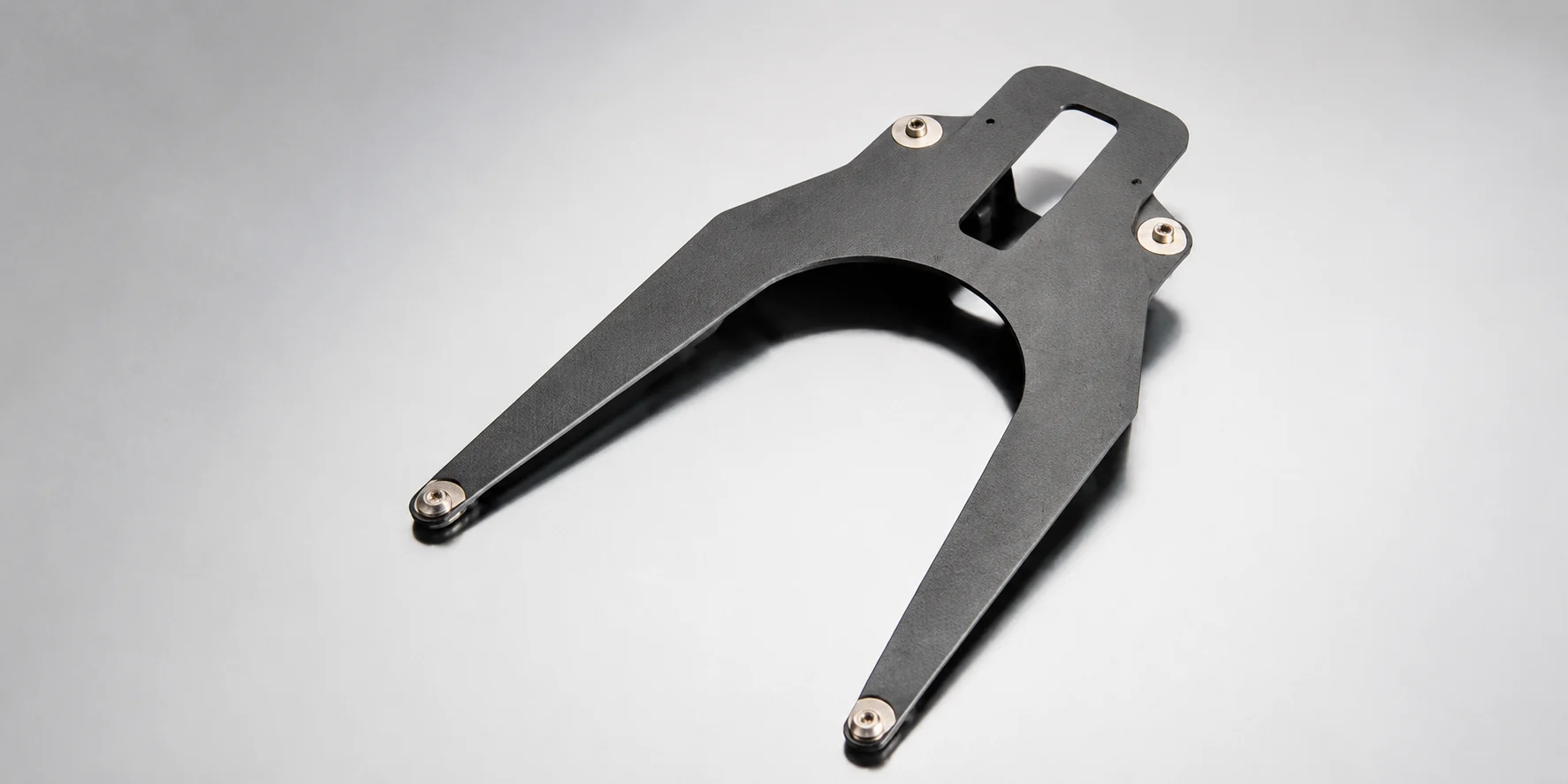
See how project constraints changed three released routes
Real projects show why the form asks about function, interfaces, stage, quantity, tools and Acceptance. In each example below, one of those inputs changed the manufacturing route and the finished result. The figures are recorded project outcomes, not general promises for another part.
BMW E46 driver foot tray: close weight and installed-fit gaps before repeat production
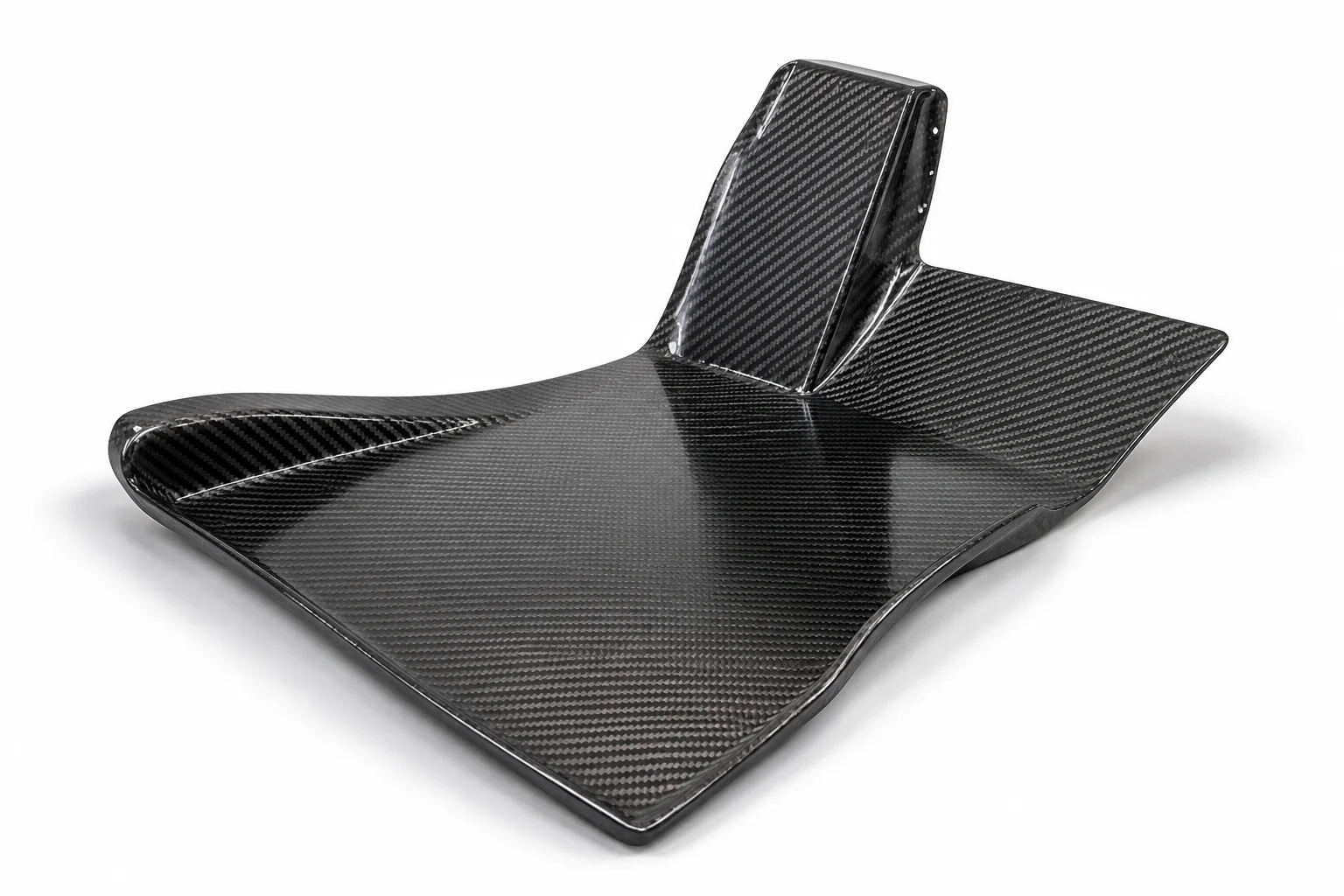
Fig. 05A — Prepreg / autoclave, 3D contour CNC finish.
A previous BMW E46 foot-tray sample exceeded 950 g, sat off the intended pedal position and required customer trimming. NEXWAVE reviewed the load path and interface, changed the laminate to [0°/±45°/90°]s, reduced nominal thickness from 2.8 mm to 2.5 mm, and used prepreg/autoclave processing with 3D contour CNC.
The released sample weighed 848 g against the project's ≤850 g requirement. It passed the project CMM, installed-fit and appearance checks, then moved through a 10-piece pilot into repeat production at 50–100 pieces/month. For this buyer, the review closed the weight and pedal-position problems before another batch created more trimming and sample-delay work.
This result applies to the approved E46 geometry, material, customer-owned steel tool, CNC program and inspection baseline.
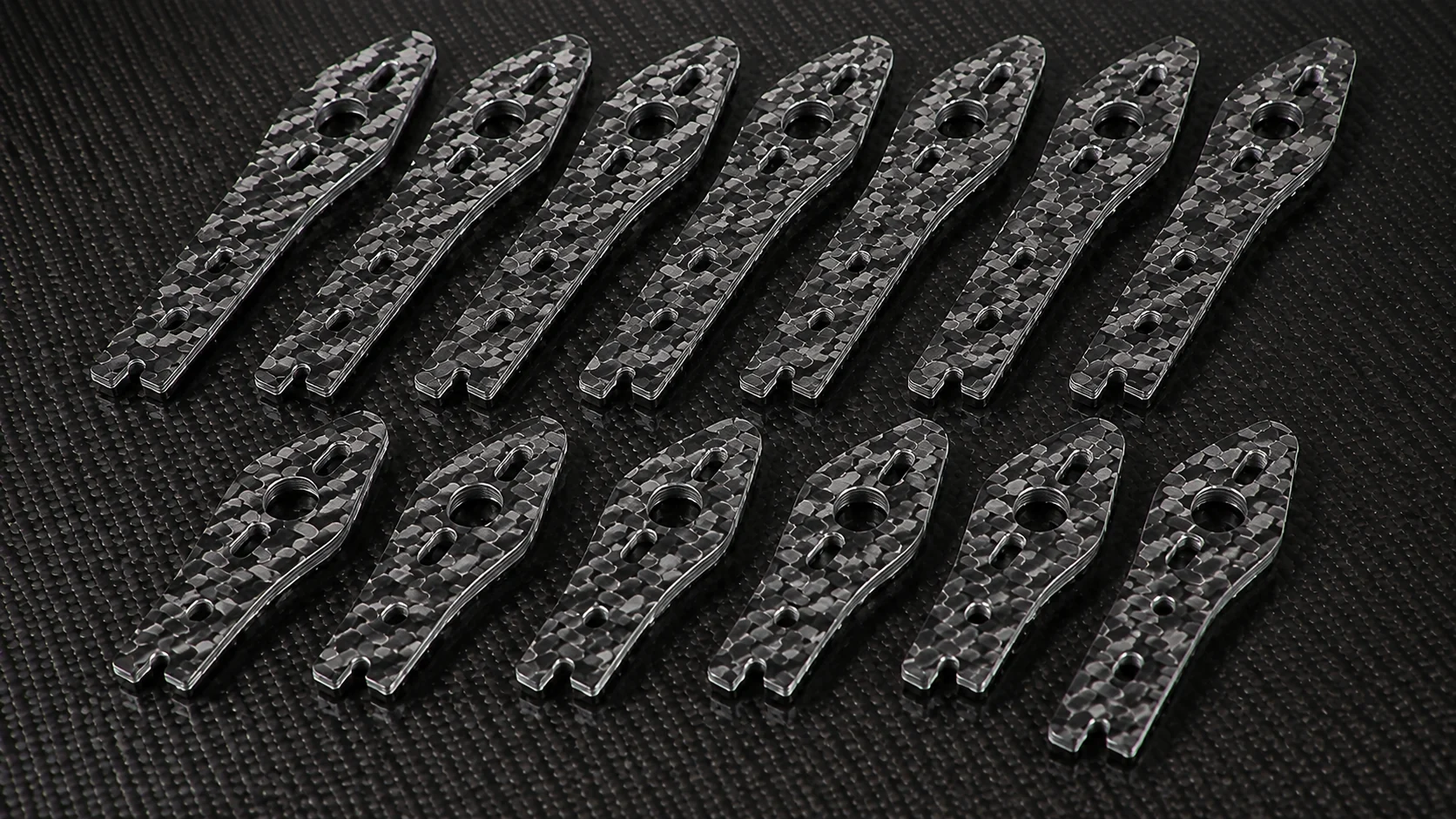
Industrial UAV frame plates: support 21 variants without 21 dedicated forming tools
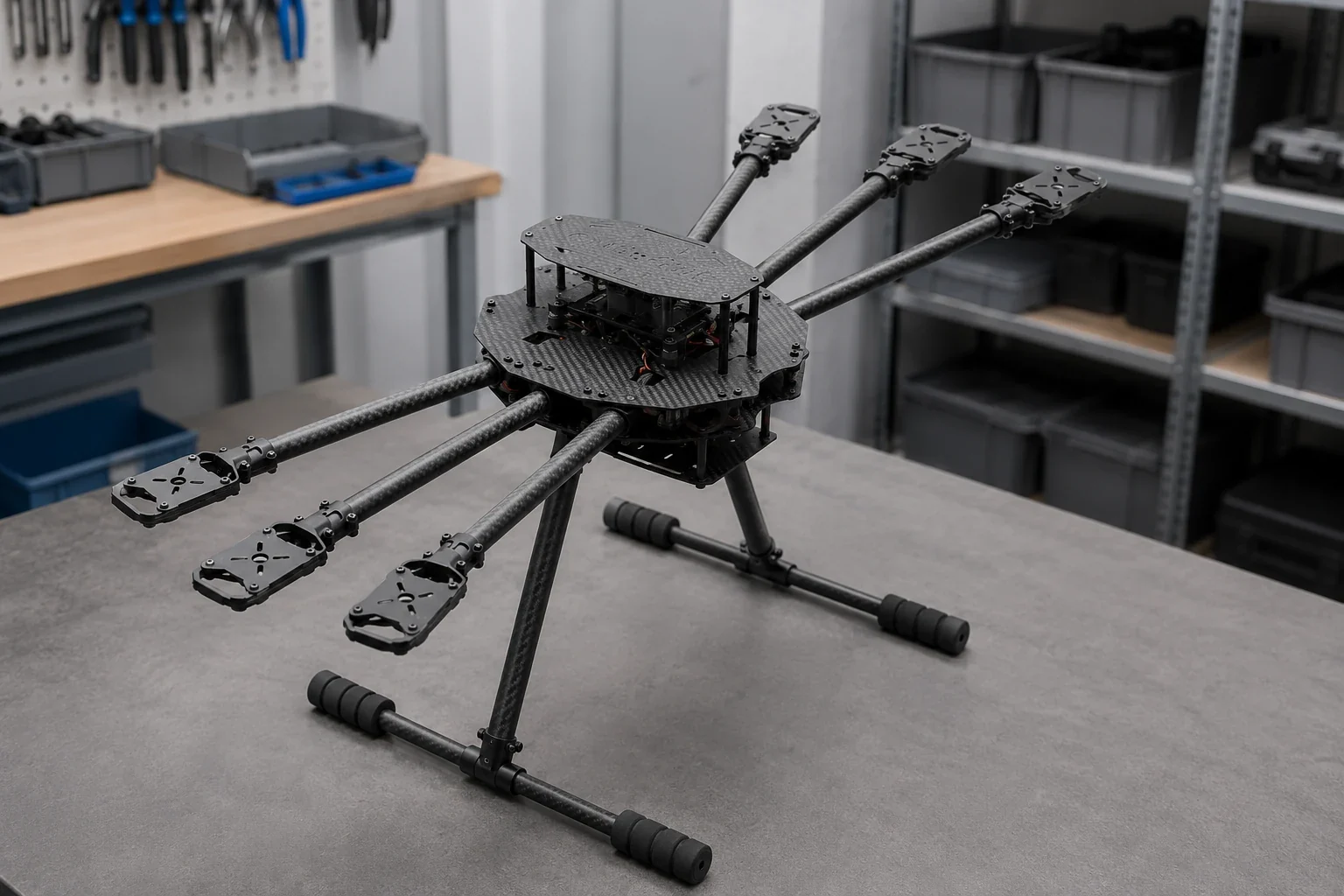
Fig. 05B — Autoclave-cured plate + precision CNC, no per-variant forming tool.
An industrial UAV program required 21 frame-plate variants, each at ≤0.05 kg with project hole-position tolerance of ±0.05 mm. A molding concept exposed the program to more than CNY 500,000 in tooling and about CNY 1,200 per part, which did not suit first batches of 50–200 pieces per variant.
The customer approved autoclave-cured plate plus precision CNC without a separate forming tool for every variant. Recorded unit cost for the released program fell below CNY 500, covering material, CNC machining and surface finishing while excluding motors, flight control and other electronics. A four-part vacuum fixture reduced recorded machining time from 15 to 5 minutes per part; the five-minute scope runs from clamping through part completion and includes tool-change time.
All 21 released variants met the project weight, CMM hole-position and edge-quality conditions. The program then averaged 500+ pieces/month in repeat production.
The result belongs to the released files, plate specification, fixture, locked CNC programs, inspection plan and order conditions.
Robotic end-effector support: reduce moving mass without losing the approved interface
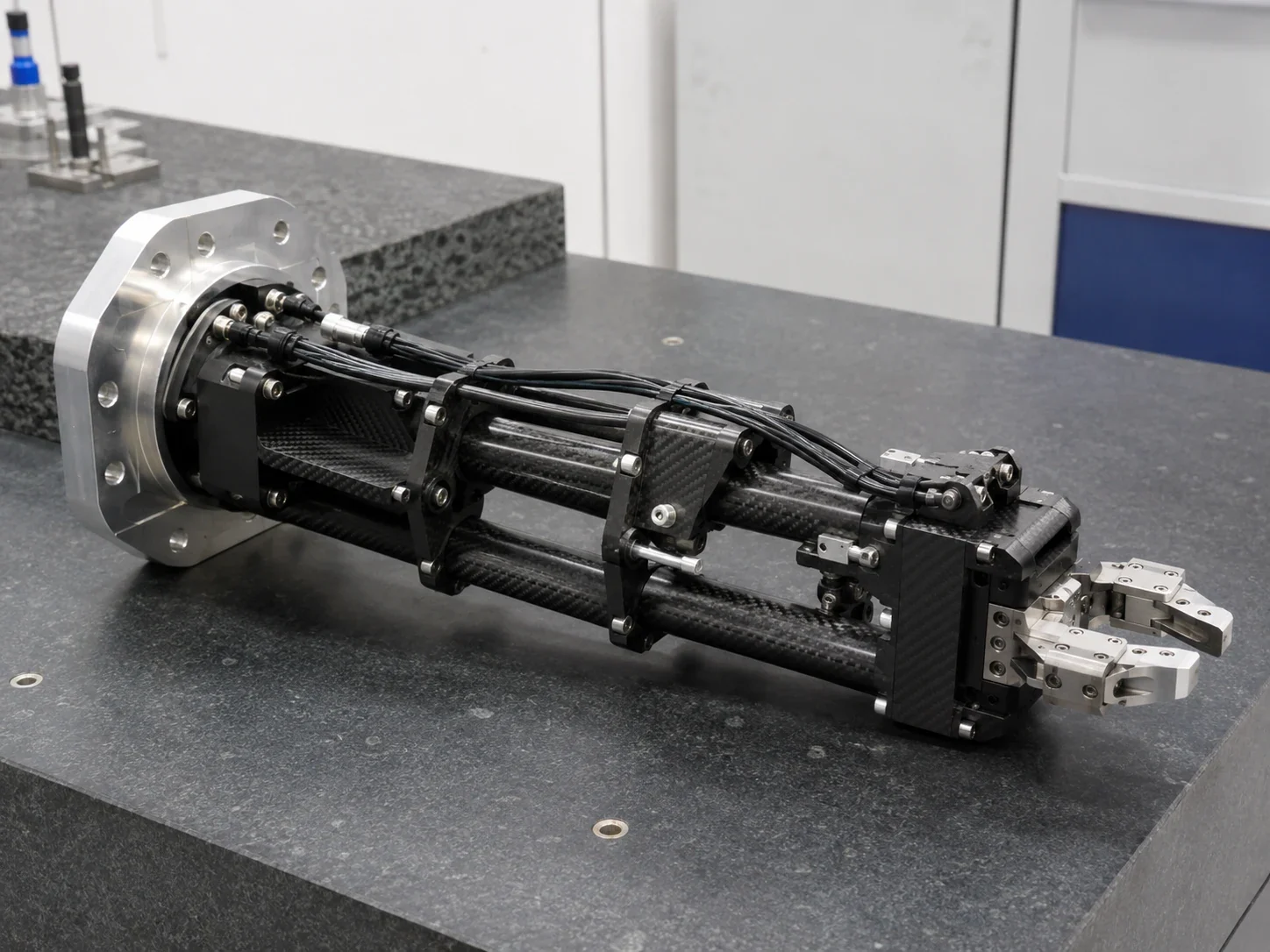
Fig. 05C — Sandwich construction, four local UD plies at the mounting face.
A carbon-fiber-reinforced nylon print had insufficient stiffness and developed creep under repeated loading. Aluminum met the machining requirement but missed the project's mass target. NEXWAVE moved the support to a carbon-fiber sandwich construction, added four local UD reinforcement plies at the mounting face, revised the bolt positions and finished the interfaces by CNC after autoclave cure.
The released part recorded a 52% weight reduction against the project's aluminum baseline. Its mounting interfaces passed CMM, and the part passed the project-defined 1,000,000-cycle repeated-motion test before a 50-piece batch and production supply. The buyer received a lighter support that had already closed the mounting-interface and project validation requirements, rather than trading lower mass for an unverified fit or repeated-load result.
This result applies only to the approved end-effector design, load case, material/core construction, interface definition and validation method. It is not a general fatigue-life or weight-reduction promise.
These cases do not determine the route for a new project. They show why the first review needs the current constraint, controlling input and result that must be accepted.
Define the complete work and delivered order
A useful quotation states which work NEXWAVE will perform and the condition in which the part will be delivered. Defining Supplier Scope before quotation helps avoid receiving a molded part when the order needed finished holes, inserts, bonding, coating, inspection evidence or export packing. It also reduces extra supplier handoffs, secondary processing charges and avoidable transport between operations.
We separate Supplier Scope from customer-supplied items, excluded work and the Acceptance requirements in the next Section.
When included in the quotation, NEXWAVE can connect material preparation, forming, autoclave, hot-press or tube processes with CNC work, bonding, assembly, finishing, project-specific inspection, packing and export-document preparation. One shared project definition helps keep each included operation tied to the same part revision and delivery state.
Packing is part of the requested delivery state. Part geometry, fragile edges, visible finishes, destination and transport conditions determine the practical protection. Labels, documents, logistics coordination and export review depend on the agreed commercial terms and end use.
Agree how the finished part and order will be accepted
Acceptance defines what makes the delivered part complete and conforming. Agreeing the critical features, methods, records and approval responsibilities before quotation helps prevent a full shipment from arriving with parts that do not fit, an unacceptable visible surface or missing evidence. That reduces exposure to sorting, refinishing, replacement parts, another shipment and delayed installation.
NEXWAVE turns the controlling requirements, critical features, inspection or test needs, required records and approval responsibilities into a project quality plan before they are treated as included work.
Acceptance follows four decisions:
Identify the controlling drawing, specification, approved sample and part revision.
Define which dimensions, interfaces, material or structural features and appearance conditions are critical.
Agree the inspection stage, method, sampling level, test and evidence needed for those features.
Name who can approve the first article, a sample, a deviation or a later change.
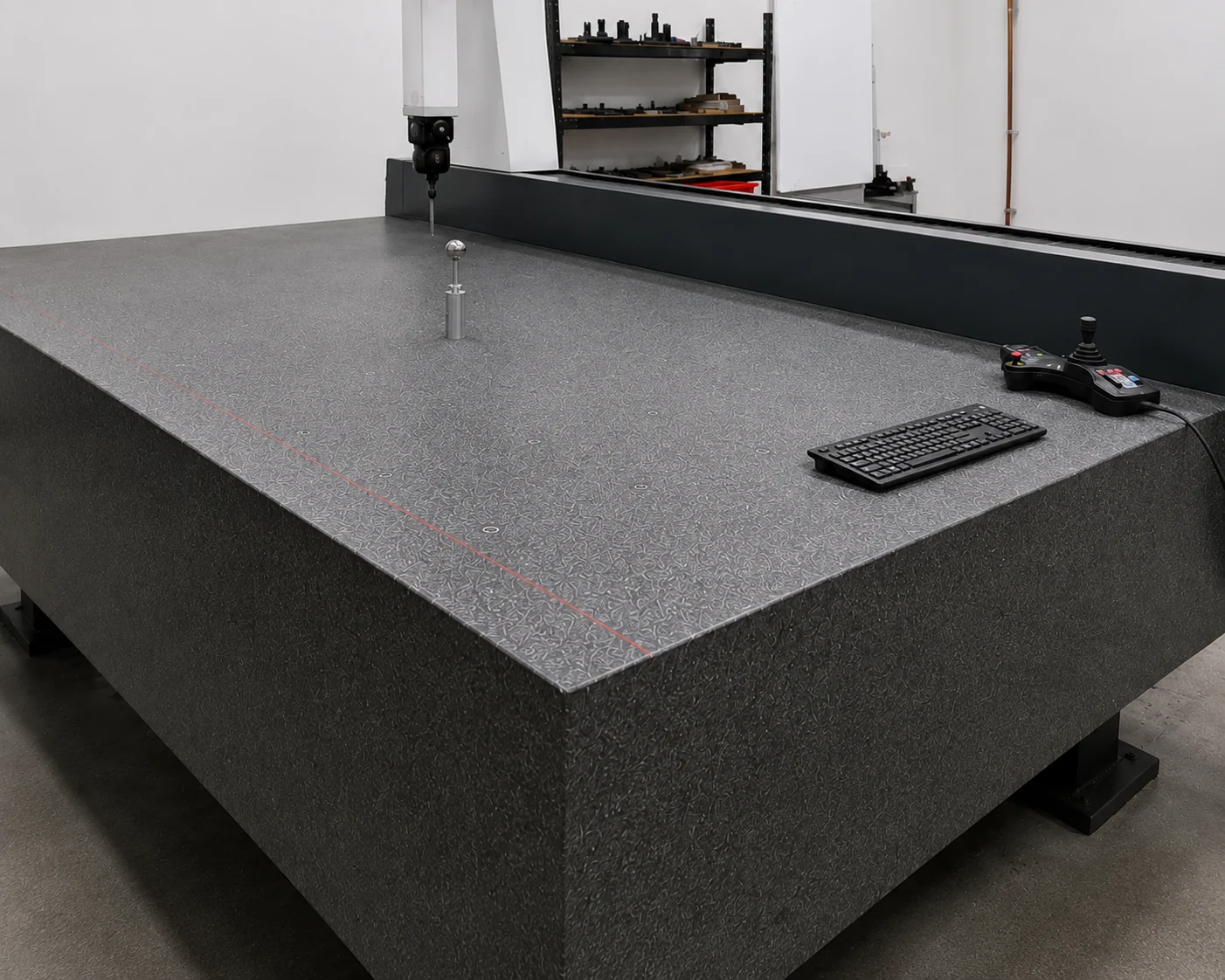
The submitted part determines which controls and records belong in the project quality plan:
Mass target — a finished-part weight record;
Critical holes, datums or mating faces — first-article or dimensional results;
Internal laminate condition — a defined nondestructive-inspection method;
Visible faces — an agreed surface report;
Kit completeness or fragile edges — a final packing record.
Material batch information, layup travelers, vacuum or cure data and nonconformance records are included only when they support a stated Acceptance feature or delivered-record requirement for this order. Only the checks and records listed for the project are included.
Inspection method must fit the part and the condition being evaluated. A CMM, C-scan, thickness check, optical system or surface measurement does not prove every possible requirement. NASA's composite NDE overview explains that method selection and sensitivity depend on the geometry and the condition sought.
Tell us which standard, customer procedure, report or certificate is required before quotation. A management-system certification does not by itself certify a product, and no universal tolerance or inspection plan applies to every carbon fiber part. Final commitments follow the agreed drawing, manufacturing route, measurement method and quality plan.
Start in writing, then exchange sensitive files by email
You can open the review without placing sensitive drawings or commercial files in a public form. This reduces unnecessary disclosure before the sharing path is understood and prevents a project from stalling because the buyer does not yet know where to send a file.
NEXWAVE first receives a written project summary and any confidentiality or NDA need, then exchanges relevant drawings, CAD, photographs and commercial documents in the reply email conversation.
Send in the form now
Part or system name, non-sensitive application summary, current stage, quantity, requested work, acceptance needs and main question
Ask us to confirm first
NDA or confidentiality needs, sensitive or controlled information, export-relevant conditions and who should join the file discussion
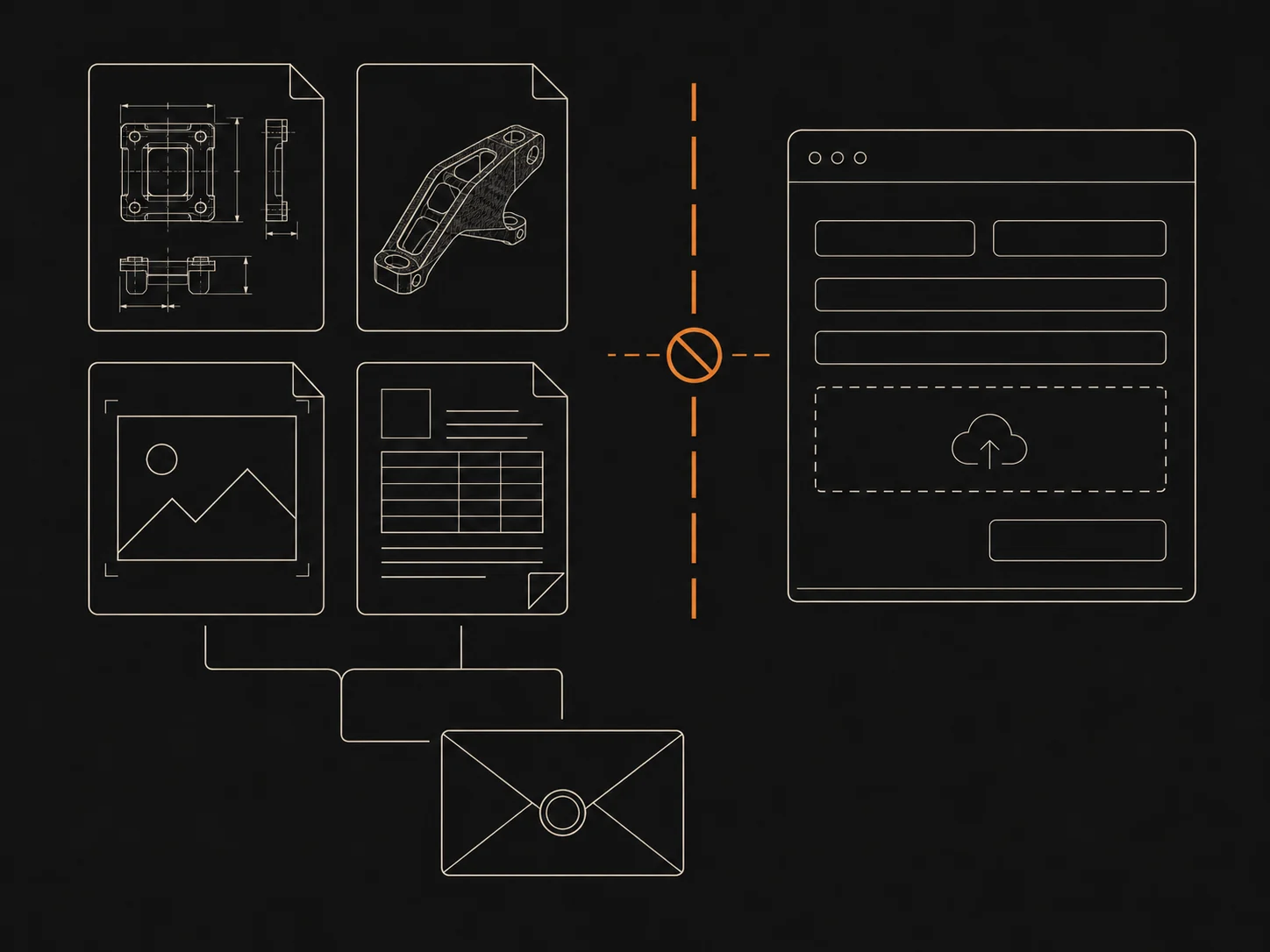
Do not send through this form
Drawings, CAD, photographs, commercial documents or any other file attachment
The form does not include a file field. It also does not publish a mailbox, attachment-size limit, signing sequence, storage promise, encryption claim or channel for regulated data. Flag the condition in writing, and NEXWAVE will address the applicable confidentiality and file-exchange arrangement in the email response.
Know what the first NEXWAVE review will return
The first reply should replace an open-ended inquiry with a defined next decision. You receive the missing-information list, current fit or risk findings and the next review action, reducing repeated emails about what is still needed and whether the project is ready for quotation, DFM, a sample or a deeper engineering review.
NEXWAVE screens the written request, identifies missing information, routes the technical and quality questions and returns the next practical action supported by the available inputs.
What happens after submission
NEXWAVE confirms the written request within 24 hours.
When information is missing, we send a focused clarification list within 48 hours.
Sales screens the commercial fit, process engineering reviews DFM and manufacturing direction, and quality reviews the stated Acceptance needs. With sufficient inputs, engineering and route review is normally completed within 3 to 5 business days.
You receive the current fit or risk findings, the remaining questions and a recommended next step. A preliminary manufacturing direction or quotation follows when the technical, Supplier Scope, Acceptance and commercial inputs are sufficient.
These times cover acknowledgement and first-review planning. They are not manufacturing or delivery lead times. A quotation, sample approval, technical approval and production release remain separate decisions.
If the project needs a sample, NDA, missing file, engineering meeting or a deeper review, the reply will identify that requirement before a production commitment is made.

Start with the project as it stands today
You do not need to settle every carbon fiber decision before contacting NEXWAVE. Share the written information you have, mark the open items and tell us what decision you need next.
Written information only. Relevant files are exchanged in the NEXWAVE reply email conversation.